
Squash blossom quesadillas
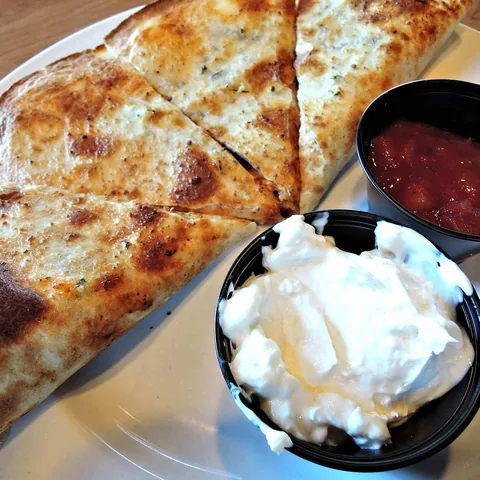
These quesadillas are made from raw masa pressed into a tortilla, filled and folded before cooking, so the shell turns chewy and toasty. The filling is squash blossoms sautéed with onion, chile and epazote, often joined by stringy Oaxaca cheese. The flavour is delicate and slightly floral, best with a spoon of salsa.
Diets
Allergens
Contains (in a typical recipe):
What it is made of
Recipe
Ingredients
- 500 g corn masa
- 300 g squash blossoms, cleaned
- 200 g Oaxaca cheese, shredded
- 1/2 onion, sliced
- 1 serrano chile, chopped
- 2 sprigs epazote
- 1 tbsp oil
- Salt
Method
- Remove the stems and pistils from the blossoms and roughly chop them.
- Sauté the onion and chile in oil, add the blossoms and epazote and cook 3 minutes; season.
- Press balls of masa into 15 cm tortillas.
- Place cheese and blossoms on one half of each, fold and seal the edges.
- Cook on a hot griddle 3–4 minutes per side until golden and the cheese melts.
How to make it lighter
- Use half the cheese and more blossoms to lighten them.
- Cook on a dry griddle rather than deep-frying.
- Serve with a fresh tomato salsa instead of cream.
History
Squash has been grown in Mexico for thousands of years and its flowers have long been used as a vegetable. In Mexico City these quesadillas are a classic of market stalls, where the cheese is often optional.
Count it in one photo
Point your camera at the table — Me Nutrition recognises Squash blossom quesadillas and every other dish, with calories and macros for each. Ate only half? Slide it.
Download on the App StoreSimilar dishes
Values are estimates per 100 g for a typical recipe; home and restaurant versions vary. Diets and allergens are worked out from the ingredients of a typical recipe — always check with whoever cooked the dish. Not medical advice. Nutrition data: Me Nutrition dish database v15. How we count →