
Sweet red bean soup (hong dou sha)
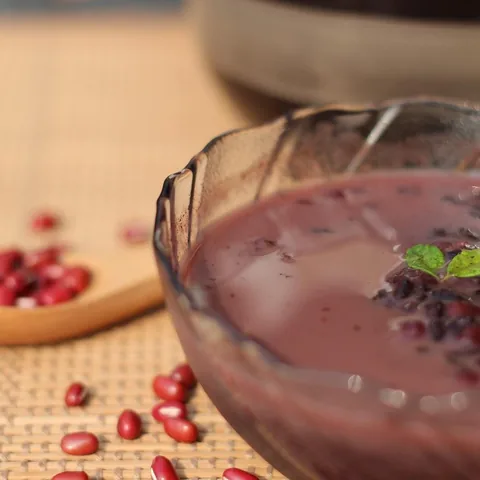
A classic Cantonese dessert soup of soft red beans that break down into a thick, sandy puree. Dried tangerine peel gives it a citrus perfume that balances the sweetness. It can be served warm in winter or chilled in summer, often with a few tapioca pearls or lotus seeds.
Diets
Allergens
None of the 14 major allergens in a typical recipe.
What it is made of
Recipe
Ingredients
- 200 g dried red beans
- 1.5 l water
- 1 piece dried tangerine peel
- 60 g rock sugar
- Pinch of salt
- Tapioca pearls (optional)
Method
- Rinse the beans and soak them for 4 hours or overnight.
- Soften the tangerine peel in water and scrape off the white pith.
- Bring beans, peel and water to a boil, then lower the heat.
- Simmer for 60 to 90 minutes until the beans are soft and the soup thickens.
- Stir in the rock sugar and a pinch of salt until dissolved.
- Serve warm or chilled.
How to make it lighter
- Cut the sugar by a third; the beans are naturally sweet.
- The soup is high in fibre and almost fat free.
- Use stevia or less rock sugar for a lower sugar version.
History
Red bean soups are a staple of Cantonese tong sui dessert houses. The dried tangerine peel, often aged for years, reflects the traditional link between sweets and soothing herbal-style ingredients.
Count it in one photo
Point your camera at the table — Me Nutrition recognises Sweet red bean soup (hong dou sha) and every other dish, with calories and macros for each. Ate only half? Slide it.
Download on the App StoreSimilar dishes

Values are estimates per 100 g for a typical recipe; home and restaurant versions vary. Diets and allergens are worked out from the ingredients of a typical recipe — always check with whoever cooked the dish. Not medical advice. Nutrition data: Me Nutrition dish database v15. How we count →