
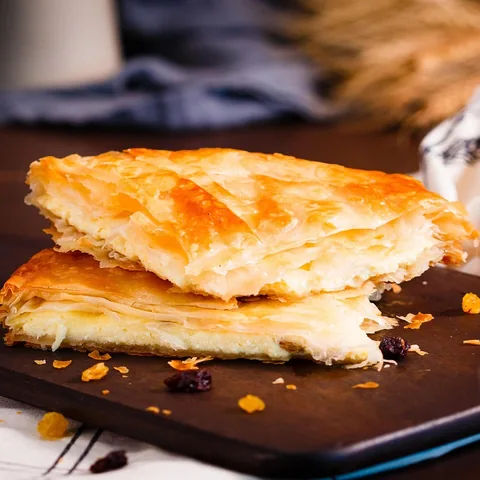
Pască (Romanian Easter cheese pie)
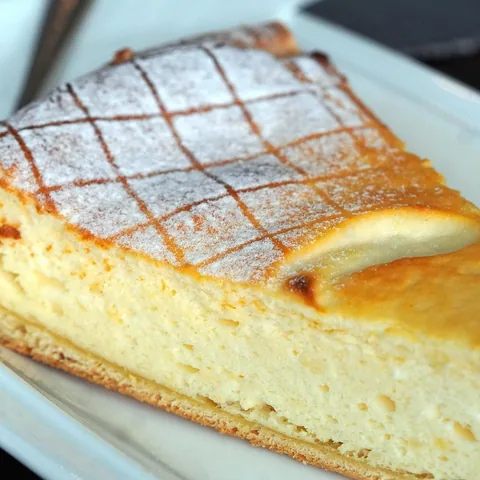
Pască is baked in a round tin: a ring of enriched yeast dough holds a thick, creamy filling of sweet cheese, eggs and raisins. Often it is decorated with dough strips in a cross or braided pattern. It is blessed at the Easter service and eaten on Easter morning with painted eggs.
Diets
Allergens
Contains (in a typical recipe):
What it is made of
Recipe
Ingredients
- 500 g flour
- 10 g dry yeast
- 250 ml warm milk
- 100 g sugar (60 g dough, rest filling)
- 60 g butter
- 4 eggs
- 600 g sweet fresh cheese or cottage cheese
- 80 g raisins and lemon zest
Method
- Mix flour, yeast, milk, sugar, butter and 1 egg into a soft dough and let it rise for 1 hour.
- Beat the cheese with 2 eggs, the remaining sugar, raisins and lemon zest.
- Roll two thirds of the dough, line a greased round tin and bring it up the sides.
- Fill with the cheese mixture and decorate with strips made from the rest of the dough.
- Brush with the last egg and bake at 180°C for 45 minutes until golden, then cool.
How to make it lighter
- Use low-fat cheese and cut the sugar by a quarter.
- Replace half the flour with wholemeal.
- Cut small slices; it is dense and filling.
History
Pască is the Romanian Easter bread, related to the Slavic paska and the Greek tsoureki in the family of festive Orthodox breads. The cheese filling reflects the end of Lent, when dairy is allowed again. Recipes are handed down within families.
Count it in one photo
Point your camera at the table — Me Nutrition recognises Pască (Romanian Easter cheese pie) and every other dish, with calories and macros for each. Ate only half? Slide it.
Download on the App StoreSimilar dishes
Values are estimates per 100 g for a typical recipe; home and restaurant versions vary. Diets and allergens are worked out from the ingredients of a typical recipe — always check with whoever cooked the dish. Not medical advice. Nutrition data: Me Nutrition dish database v15. How we count →