
Varză călită (Romanian braised cabbage)
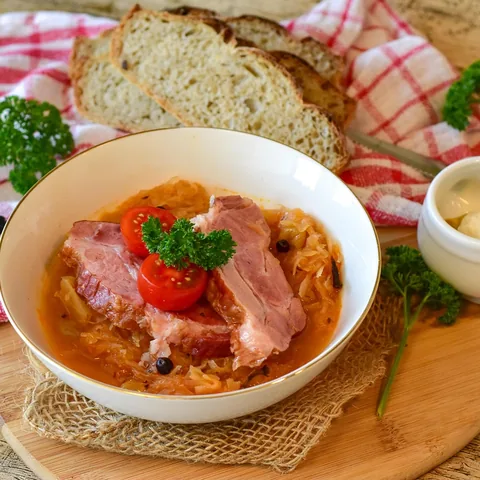
Varză călită is cabbage shredded and cooked slowly in a little oil with onion and tomato until soft and sweet. In winter it is made with sauerkraut for a gentle sour note, and sometimes diced smoked sausage is added. It is eaten as a side with roast pork or sausages, or alone with polenta in fasting time.
Diets
Allergens
None of the 14 major allergens in a typical recipe.
What it is made of
Recipe
Ingredients
- 800 g white cabbage or sauerkraut, shredded
- 1 onion, chopped
- 40 ml oil
- 2 tomatoes or 2 tbsp tomato paste
- 1 tsp paprika
- 100 g smoked sausage, diced (optional)
Method
- Heat the oil and soften the onion for 5 minutes.
- Add the optional sausage and brown it lightly.
- Stir in paprika, tomato and the cabbage.
- Add 100 ml water, cover and cook on low heat for 35 to 40 minutes, stirring now and then.
- Season with salt and pepper and serve warm.
How to make it lighter
- Use only a tablespoon or two of oil and a lid to steam the cabbage.
- Leave out sausage for a vegan, low-fat side.
- Rinse sauerkraut briefly if you want less sodium.
History
Cabbage has been a staple winter vegetable in Romania for centuries because it stores well and ferments easily. The word călită refers to cooking something gently in fat until soft. Variations are found across the Balkans and Central Europe.
Count it in one photo
Point your camera at the table — Me Nutrition recognises Varză călită (Romanian braised cabbage) and every other dish, with calories and macros for each. Ate only half? Slide it.
Download on the App StoreSimilar dishes
Values are estimates per 100 g for a typical recipe; home and restaurant versions vary. Diets and allergens are worked out from the ingredients of a typical recipe — always check with whoever cooked the dish. Not medical advice. Nutrition data: Me Nutrition dish database v15. How we count →