
Khvorost (crispy fried pastry twists)
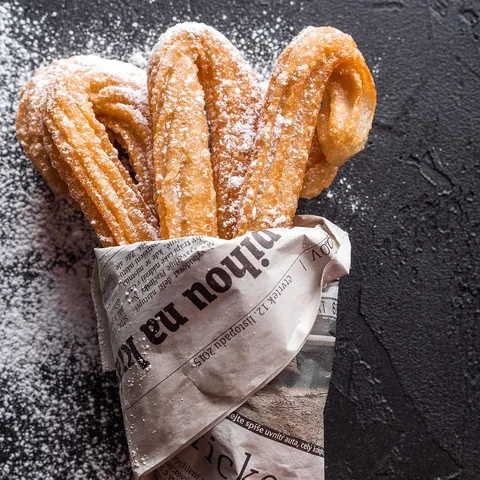
Khvorost, meaning "brushwood", are thin ribbons of dough knotted or twisted, fried until blistered and crisp, then showered with powdered sugar. They are light, brittle and only mildly sweet, shattering with each bite. Russian families make big piles of them for holidays and serve them with tea.
Diets
Allergens
Contains (in a typical recipe):
What it is made of
Recipe
Ingredients
- 250 g flour
- 2 eggs
- 2 tbsp sour cream
- 1 tbsp sugar
- pinch of salt
- oil for deep frying
- powdered sugar for dusting
Method
- Mix eggs, sour cream, sugar and salt, then knead in the flour to a firm, smooth dough; rest 20 minutes.
- Roll the dough out very thinly, about 1–2 mm.
- Cut into strips about 3 × 10 cm and make a slit in the middle of each.
- Pull one end through the slit to form a twist.
- Fry in hot oil (170–175 °C) for about 30 seconds per side until pale golden and blistered.
- Drain on paper towels and dust generously with powdered sugar.
How to make it lighter
- Roll the dough as thin as possible so each twist absorbs less oil.
- Drain thoroughly and skip extra sugar if serving with jam or honey.
- Enjoy a few pieces as a treat and pair with unsweetened tea.
History
Fried dough twists of this kind are known across Eastern and Central Europe, for example as Polish chrust or faworki. In Russia khvorost has long been a home-made treat for festive occasions, especially Maslenitsa.
Count it in one photo
Point your camera at the table — Me Nutrition recognises Khvorost (crispy fried pastry twists) and every other dish, with calories and macros for each. Ate only half? Slide it.
Download on the App StoreSimilar dishes
Values are estimates per 100 g for a typical recipe; home and restaurant versions vary. Diets and allergens are worked out from the ingredients of a typical recipe — always check with whoever cooked the dish. Not medical advice. Nutrition data: Me Nutrition dish database v15. How we count →