
Muraveinik (anthill cake)
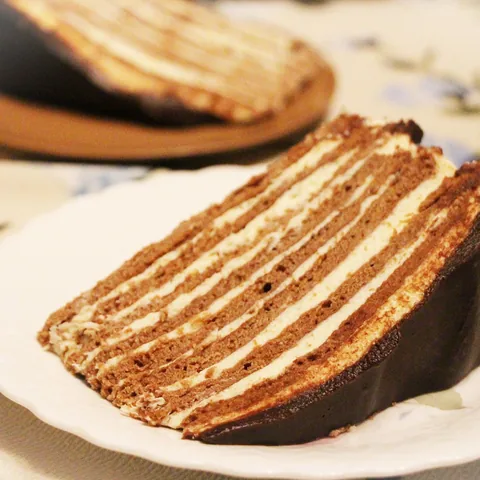
Muraveinik, or anthill cake, is made by baking a simple shortbread dough, breaking it into small pieces and mixing them with a cream of boiled condensed milk and butter plus chopped walnuts. The mass is heaped into a mound and sprinkled with poppy seeds or grated chocolate to look like an anthill. It is crunchy, caramel-sweet and rich.
Diets
Allergens
Contains (in a typical recipe):
What it is made of
Recipe
Ingredients
- 400 g flour
- 200 g cold butter
- 100 g sour cream
- 80 g sugar
- 1 tsp baking powder
- 380 g boiled condensed milk
- 100 g soft butter for the cream
- 100 g walnuts
Method
- Rub the cold butter into flour, sugar and baking powder, add sour cream and knead quickly.
- Chill, then grate or break the dough onto a tray.
- Bake at 190 °C for 15–20 minutes until golden and cool.
- Beat the boiled condensed milk with the soft butter and mix in the crumbs and chopped walnuts.
- Heap into a mound, sprinkle with grated chocolate and chill for 3 hours.
How to make it lighter
- Serve small portions; it is very energy-dense.
- Reduce butter in the cream.
- Use oat cookies for part of the base.
History
Muraveinik became a popular home cake in the late Soviet period because it needed only basic ingredients and no special skills. It is still a common choice for birthdays.
Count it in one photo
Point your camera at the table — Me Nutrition recognises Muraveinik (anthill cake) and every other dish, with calories and macros for each. Ate only half? Slide it.
Download on the App StoreSimilar dishes

Values are estimates per 100 g for a typical recipe; home and restaurant versions vary. Diets and allergens are worked out from the ingredients of a typical recipe — always check with whoever cooked the dish. Not medical advice. Nutrition data: Me Nutrition dish database v15. How we count →