
Tefteli (Russian meatballs in tomato sauce)
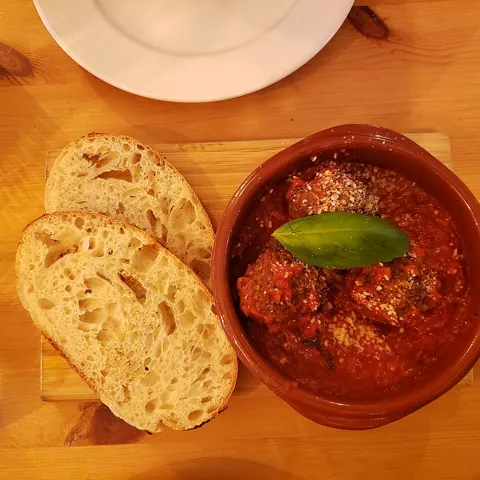
Tefteli are round meatballs of minced beef and pork mixed with rice and onion, simmered in a sauce of tomato, carrot and sour cream. They are soft, mild and comforting, with a slightly tangy sauce. They are served with mashed potatoes, pasta or buckwheat, and are a staple of school and home meals.
Diets
Allergens
Contains (in a typical recipe):
What it is made of
Recipe
Ingredients
- 500 g mixed minced beef and pork
- 80 g rice
- 1 onion
- 1 carrot
- 1 egg
- 200 ml tomato sauce
- 100 g sour cream
- 300 ml water
- salt, pepper, bay leaf
Method
- Boil the rice for 7 minutes and drain.
- Mix the mince with rice, half the onion grated, egg, salt and pepper; shape walnut-sized balls.
- Brown the meatballs lightly in a pan and move them to a pot.
- Fry the remaining onion and grated carrot, add tomato sauce, sour cream and water.
- Pour the sauce over the meatballs, add a bay leaf and simmer covered for 35 minutes.
How to make it lighter
- Use lean beef or turkey mince.
- Skip browning and simmer the meatballs directly in the sauce.
- Serve with steamed vegetables instead of pasta.
History
The word comes from the Turkic and Persian word for meatball, and dishes of this kind are widespread from the Balkans to Central Asia. In Russia, tefteli with rice became a fixture of Soviet canteen menus and family cooking.
Count it in one photo
Point your camera at the table — Me Nutrition recognises Tefteli (Russian meatballs in tomato sauce) and every other dish, with calories and macros for each. Ate only half? Slide it.
Download on the App StoreSimilar dishes

Values are estimates per 100 g for a typical recipe; home and restaurant versions vary. Diets and allergens are worked out from the ingredients of a typical recipe — always check with whoever cooked the dish. Not medical advice. Nutrition data: Me Nutrition dish database v15. How we count →