
Pupusas revueltas (Salvadoran mixed pupusas)
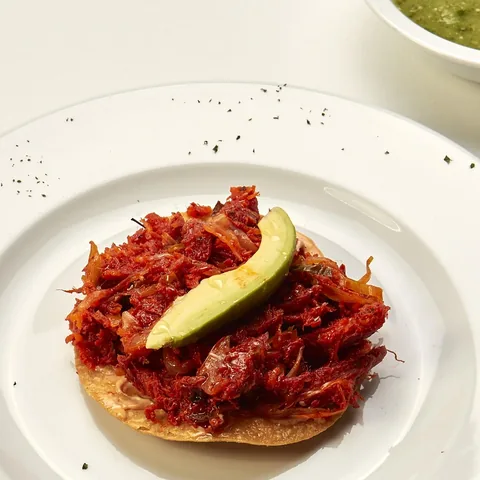
Pupusas revueltas are thick masa discs filled with a mix of seasoned pork, mashed beans and cheese, then browned on a hot griddle. The outside is lightly crisp and the inside is soft and gooey. They are eaten by hand with curtido and a thin tomato sauce.
Diets
Allergens
Contains (in a typical recipe):
What it is made of
Recipe
Ingredients
- 300 g masa harina
- 350 ml warm water
- 150 g cooked minced pork
- 120 g refried red beans
- 120 g quesillo or mozzarella, shredded
- 1/2 onion, finely chopped
- 1 tbsp oil
- Salt
Method
- Mix masa harina, water and a pinch of salt into a soft dough and rest 10 minutes.
- Mix the pork, beans, cheese and onion into a thick paste for the filling.
- Roll a ball of dough, press a hollow into it, add filling and close it.
- Pat gently into a disc about 1 cm thick.
- Cook on a lightly oiled griddle 3-4 minutes per side until spotted golden.
- Serve hot with curtido and tomato salsa.
How to make it lighter
- Use less cheese and more beans for extra fibre.
- Brown on a dry non-stick pan to cut added oil.
- Fill with lean pork or vegetables only for a lighter version.
History
Pupusas are considered the national dish of El Salvador and have a long indigenous corn-based heritage in the region. Pupuserías serving them are found in almost every town, and the dish has a dedicated national day.
Count it in one photo
Point your camera at the table — Me Nutrition recognises Pupusas revueltas (Salvadoran mixed pupusas) and every other dish, with calories and macros for each. Ate only half? Slide it.
Download on the App StoreSimilar dishes
Values are estimates per 100 g for a typical recipe; home and restaurant versions vary. Diets and allergens are worked out from the ingredients of a typical recipe — always check with whoever cooked the dish. Not medical advice. Nutrition data: Me Nutrition dish database v15. How we count →