
Mafé (Senegalese peanut stew)
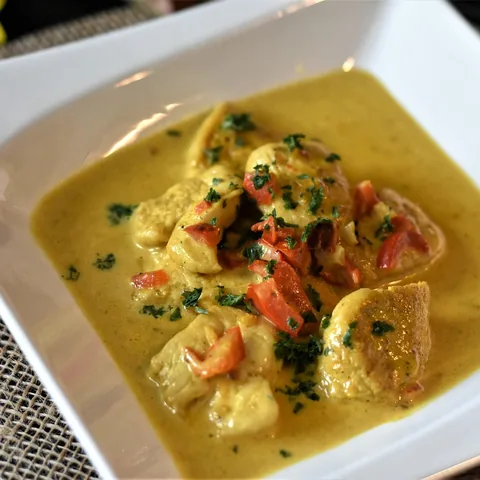
Mafé is a thick stew in which beef or lamb is slowly cooked in a sauce of peanut butter and tomato, with sweet potato, carrot and cabbage. The sauce is velvety and nutty with a gentle tang from tomato and warmth from chilli. It is served over white rice and is a staple of Senegalese family meals.
Diets
Allergens
Contains (in a typical recipe):
What it is made of
Recipe
Ingredients
- 700 g beef or lamb, cubed
- 120 g natural peanut butter
- 60 g tomato paste
- 250 g sweet potato
- 200 g carrots
- 150 g onion
- 40 ml vegetable oil for frying
- 800 ml water
Method
- Brown the meat in oil with the chopped onion
- Stir in tomato paste and cook for a few minutes
- Add water and simmer 45 minutes until the meat is tender
- Whisk in the peanut butter and add the vegetables
- Cook 25-30 minutes more until the oil rises to the top and serve with rice
How to make it lighter
- Use unsweetened natural peanut butter and skim off extra oil
- Add more vegetables and less meat
- Serve with brown rice or millet
History
The dish is shared across Mali, Gambia and Senegal and is also known as maafe or domoda in neighbouring countries. Groundnuts became a major crop in Senegal, which is why it features so strongly in the local cooking.
Count it in one photo
Point your camera at the table — Me Nutrition recognises Mafé (Senegalese peanut stew) and every other dish, with calories and macros for each. Ate only half? Slide it.
Download on the App StoreSimilar dishes
Values are estimates per 100 g for a typical recipe; home and restaurant versions vary. Diets and allergens are worked out from the ingredients of a typical recipe — always check with whoever cooked the dish. Not medical advice. Nutrition data: Me Nutrition dish database v15. How we count →