
Shanghai pork chop with rice cakes (pai gu nian gao)
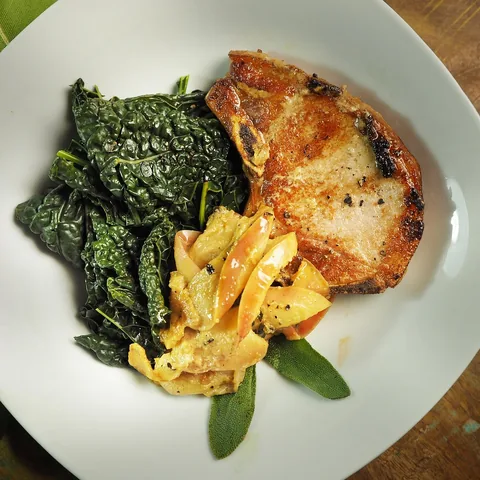
A thin pork chop is tenderized, lightly coated and fried until golden, then served with sliced rice cakes stir-fried in a sweet soy glaze. The meat is juicy with a gentle crunch and the rice cakes are chewy and sticky. It is a popular Shanghai lunch plate and snack.
Diets
Allergens
Contains (in a typical recipe):
What it is made of
Recipe
Ingredients
- 2 bone-in pork chops, about 300 g
- 200 g sliced rice cakes
- 2 tbsp soy sauce
- 1 tbsp sugar
- 1 egg
- 3 tbsp flour
- 100 ml stock
- Oil for frying
Method
- Pound the pork chops thin and marinate in half the soy sauce for 15 minutes.
- Coat in beaten egg and flour.
- Fry the chops in oil until golden and cooked through, then slice.
- Simmer the rice cakes in stock with sugar and remaining soy until glossy.
- Pile the rice cakes onto a plate and top with the pork.
- Serve hot with a vegetable side.
How to make it lighter
- Bake or air fry the chops for less oil.
- Use fewer rice cakes and more greens.
- Reduce the sugar in the glaze.
History
The pairing is typical of Shanghai-style cooking, which favors a sweet-savory balance with soy and sugar. Rice cakes are a staple of the Yangtze Delta and appear in both savory and sweet dishes.
Count it in one photo
Point your camera at the table — Me Nutrition recognises Shanghai pork chop with rice cakes (pai gu nian gao) and every other dish, with calories and macros for each. Ate only half? Slide it.
Download on the App StoreSimilar dishes
Values are estimates per 100 g for a typical recipe; home and restaurant versions vary. Diets and allergens are worked out from the ingredients of a typical recipe — always check with whoever cooked the dish. Not medical advice. Nutrition data: Me Nutrition dish database v15. How we count →