
Shanghai hairy crab (da zha xie)
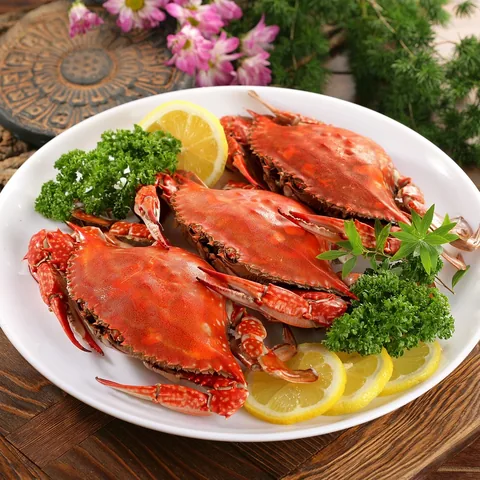
Hairy crabs are small freshwater crabs prized in autumn for their sweet meat and rich roe or creamy fat. They are tied, steamed whole with ginger and picked apart by hand at the table. A dip of black vinegar, ginger and a little sugar brightens the sweet, rich flesh.
Diets
Allergens
Contains (in a typical recipe):
What it is made of
Recipe
Ingredients
- 4 live hairy crabs, about 150 g each
- 30 g ginger, sliced
- Perilla leaves or scallions for the steamer
- 4 tbsp black vinegar
- 2 tbsp julienned ginger
- 1 tsp sugar
Method
- Rinse the crabs and tie them to keep the legs still.
- Lay ginger and perilla in a steamer and set the crabs belly up on top.
- Steam over high heat for 18 to 20 minutes.
- Mix black vinegar, julienned ginger and sugar for the dip.
- Let the crabs cool slightly, then twist off legs and open the shell.
- Pick out the meat and roe and dip lightly.
How to make it lighter
- Eat in moderation, as the roe is high in cholesterol.
- Serve with ginger tea or a vegetable side.
- Skip fatty sauces; the vinegar dip is enough.
History
Hairy crabs are most associated with the lakes of Jiangsu, and Shanghai markets sell them from roughly October to December. Eating them is a seasonal ritual, often paired with ginger tea to balance their cooling nature in Chinese food belief.
Count it in one photo
Point your camera at the table — Me Nutrition recognises Shanghai hairy crab (da zha xie) and every other dish, with calories and macros for each. Ate only half? Slide it.
Download on the App StoreSimilar dishes
Values are estimates per 100 g for a typical recipe; home and restaurant versions vary. Diets and allergens are worked out from the ingredients of a typical recipe — always check with whoever cooked the dish. Not medical advice. Nutrition data: Me Nutrition dish database v15. How we count →