
Sheki halva (Azerbaijani rice-flour lattice sweet)
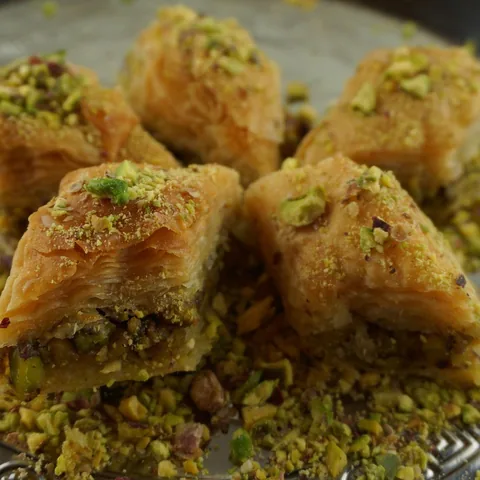
Sheki halva, also called Sheki pakhlava, is built from a delicate lattice of rice-flour batter drizzled from a special funnel onto a round tray in many fine layers. Between them goes a thick layer of chopped hazelnuts with cardamom and coriander, and the top is decorated with saffron lines. Once baked it is drenched in sugar syrup, giving a sticky, crunchy and very sweet confection eaten in small pieces with tea.
Diets
Allergens
Contains (in a typical recipe):
What it is made of
Recipe
Ingredients
- 300 g rice flour
- 300 ml water
- 500 g hazelnuts, roughly chopped
- 1 tsp ground cardamom
- 1 tsp ground coriander
- A pinch of saffron steeped in water
- Syrup: 600 g sugar, 300 ml water, 2 tbsp honey
Method
- Whisk rice flour and water into a smooth, runny batter and let it stand for 1 hour.
- Mix the chopped hazelnuts with cardamom and coriander.
- Using a squeeze bottle or funnel, drizzle a fine lattice of batter onto a greased round tray, building several thin layers.
- Spread the hazelnut mixture evenly, then cover with more lattice layers and decorate with saffron lines.
- Bake at 170 °C for about 40 minutes until set and crisp.
- Boil the sugar, water and honey into a thick syrup, pour it over the hot halva and leave for several hours before cutting into diamonds.
How to make it lighter
- Cut tiny pieces: a 30–40 g serving is very filling.
- Make the syrup thinner and use less of it for a lighter result.
- Serve with unsweetened tea or lemon to cut the sweetness.
History
This sweet is the signature of the town of Sheki in north-western Azerbaijan, a stop on old caravan routes known for silk and its confectioners. Making the lattice by hand is a skilled craft, and many visitors buy it in Sheki's shops as a souvenir.
Count it in one photo
Point your camera at the table — Me Nutrition recognises Sheki halva (Azerbaijani rice-flour lattice sweet) and every other dish, with calories and macros for each. Ate only half? Slide it.
Download on the App StoreSimilar dishes
Values are estimates per 100 g for a typical recipe; home and restaurant versions vary. Diets and allergens are worked out from the ingredients of a typical recipe — always check with whoever cooked the dish. Not medical advice. Nutrition data: Me Nutrition dish database v15. How we count →