
Smörgåstårta (Swedish sandwich cake)
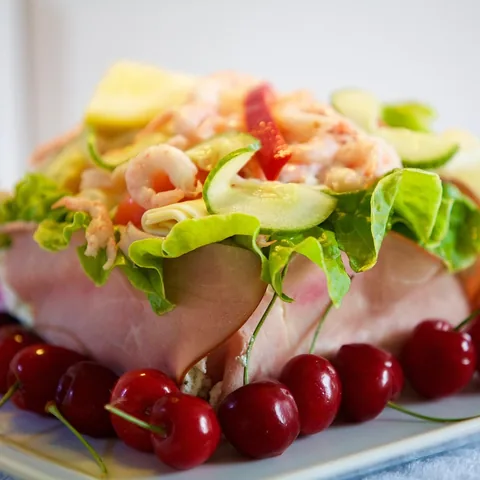
Smörgåstårta is a layered savory cake made from slices of soft bread spread with creamy fillings of shrimp, smoked salmon, egg and mayonnaise, then covered with a cream-cheese frosting. It is cool, creamy and refreshing with gentle fish and dill flavours. It is decorated like a dessert cake and served in slices.
Diets
Allergens
Contains (in a typical recipe):
What it is made of
Recipe
Ingredients
- 12 pc white bread slices
- 150 g mayonnaise
- 250 g crème fraîche
- 200 g peeled shrimp
- 150 g smoked salmon
- 4 pc eggs
- 1 pc cucumber
- 10 g fresh dill
- 1 pc lemon
Method
- Trim the crusts and arrange bread slices on a tray as the base.
- Spread with a mixture of egg, mayonnaise and dill.
- Add another bread layer and spread with shrimp and crème fraîche.
- Finish with a third layer and cover the whole cake with seasoned cream cheese and crème fraîche.
- Decorate with shrimp, smoked salmon, cucumber, egg and dill and chill for a few hours.
How to make it lighter
- Use more crème fraîche or yogurt and less mayonnaise.
- Choose wholegrain bread.
- Cut small slices and serve with a crisp salad.
History
This party dish became popular in Sweden in the 20th century and is common at birthdays, graduations and other celebrations. Its decoration, with shrimp, cucumber and egg, is part of the fun.
Count it in one photo
Point your camera at the table — Me Nutrition recognises Smörgåstårta (Swedish sandwich cake) and every other dish, with calories and macros for each. Ate only half? Slide it.
Download on the App StoreSimilar dishes
Values are estimates per 100 g for a typical recipe; home and restaurant versions vary. Diets and allergens are worked out from the ingredients of a typical recipe — always check with whoever cooked the dish. Not medical advice. Nutrition data: Me Nutrition dish database v15. How we count →