
Sosaties (Cape curried lamb skewers)
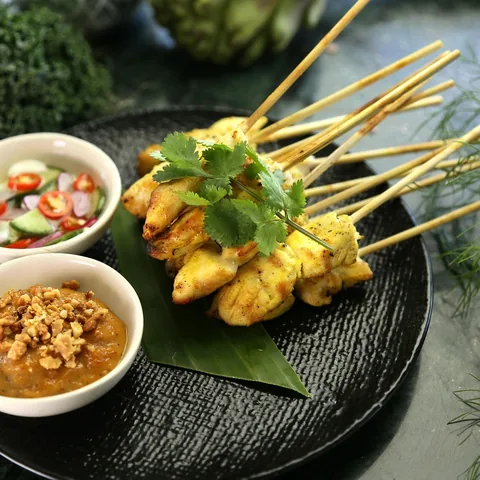
Sosaties are lamb cubes marinated in a sweet and sour curry mixture and threaded on skewers with dried apricots and onion. They are grilled over coals until glossy and slightly charred. The taste is warmly spiced with a fruity edge.
Diets
Allergens
None of the 14 major allergens in a typical recipe.
What it is made of
Recipe
Ingredients
- 800 g lamb leg, cubed
- 150 g dried apricots
- 2 onions, in chunks
- 2 tbsp curry powder
- 3 tbsp apricot jam
- 60 ml vinegar
- 2 garlic cloves
- 1 tbsp oil
Method
- Soften the onion and garlic in oil and stir in the curry powder.
- Add jam and vinegar and simmer 5 minutes, then cool.
- Marinate the lamb in this sauce overnight.
- Thread lamb, apricots and onion onto skewers.
- Grill over medium coals, turning and basting, for 12 minutes.
- Serve hot with rice or bread.
How to make it lighter
- Use less jam in the marinade to cut sugar.
- Trim the lamb fat before skewering.
- Add more onion and pepper pieces on each skewer.
History
The dish is tied to the Cape Malay community, whose cooks blended Southeast Asian spices with Cape ingredients. The name is thought to come from Malay-Indonesian words for skewered meat. It is a staple of South African braai gatherings.
Count it in one photo
Point your camera at the table — Me Nutrition recognises Sosaties (Cape curried lamb skewers) and every other dish, with calories and macros for each. Ate only half? Slide it.
Download on the App StoreSimilar dishes
Values are estimates per 100 g for a typical recipe; home and restaurant versions vary. Diets and allergens are worked out from the ingredients of a typical recipe — always check with whoever cooked the dish. Not medical advice. Nutrition data: Me Nutrition dish database v15. How we count →