
Oshi palov (Tajik pilaf)
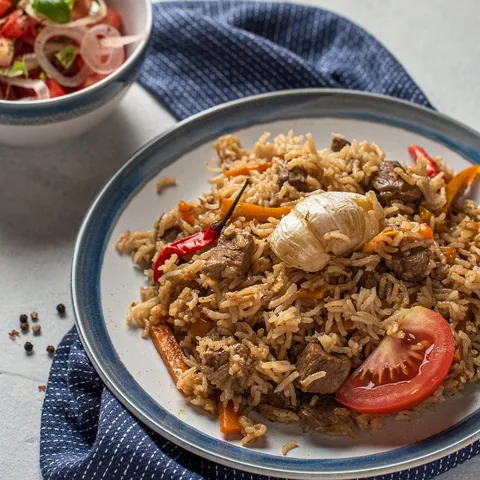
Oshi palov is the festive rice dish of Tajikistan, cooked in a large kazan over a strong fire. Lamb is seared in oil, then joined by onion, a generous amount of yellow carrot, soaked chickpeas and cumin, before the rice is layered on top to steam. It is often crowned with whole garlic heads and sometimes quince or raisins. The pilaf is served on a big platter and eaten by hand or with a spoon.
Diets
Allergens
None of the 14 major allergens in a typical recipe.
What it is made of
Recipe
Ingredients
- 500 g long-grain rice
- 500 g lamb, in pieces
- 500 g yellow carrots, in strips
- 150 g chickpeas, soaked overnight
- 2 onions, sliced
- 100 ml oil
- 1 tbsp cumin
- 1 head garlic, salt
Method
- Soak the rice for an hour and cook the chickpeas until almost tender.
- Brown the lamb in hot oil, then add the onion and fry until golden.
- Add the carrots and fry until soft, then the chickpeas, cumin and salt.
- Pour in hot water to just cover, add the garlic and simmer 30 minutes.
- Spread the rice on top, add water to cover by 1 cm and cook until absorbed.
- Cover tightly and steam on low heat 20 minutes, then mix and serve.
How to make it lighter
- Cut the oil by half and trim the fat from the meat.
- The chickpeas add fibre and protein, so the rice portion can be smaller.
- Serve with a fresh shakarob salad to balance the richness.
History
In Tajik households palov is traditionally cooked by men for weddings, holidays and gatherings of friends. The dish is shared with Uzbek cuisine, and plov from this region is listed by UNESCO as intangible cultural heritage. Chickpeas are a typical Tajik touch.
Count it in one photo
Point your camera at the table — Me Nutrition recognises Oshi palov (Tajik pilaf) and every other dish, with calories and macros for each. Ate only half? Slide it.
Download on the App StoreSimilar dishes
Values are estimates per 100 g for a typical recipe; home and restaurant versions vary. Diets and allergens are worked out from the ingredients of a typical recipe — always check with whoever cooked the dish. Not medical advice. Nutrition data: Me Nutrition dish database v15. How we count →