
Trinidad callaloo
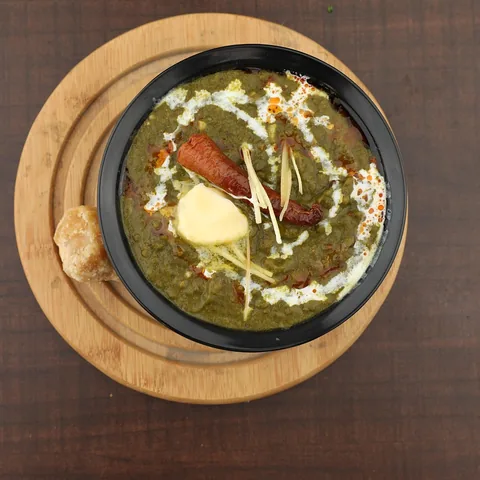
Callaloo is a velvety green soup-like side made from dasheen leaves, okra and coconut milk, cooked until soft and swizzled smooth. It tastes mild, savory and slightly sweet from the coconut, with garlic and thyme in the background. In Trinidad it is a classic Sunday dish served with rice, macaroni pie or stewed meat.
Diets
Allergens
None of the 14 major allergens in a typical recipe.
What it is made of
Recipe
Ingredients
- 500 g dasheen leaves, chopped
- 150 g okra, sliced
- 400 ml coconut milk
- 1 onion, chopped
- 3 garlic cloves
- 4 sprigs thyme
- 1 whole scotch bonnet pepper
- 500 ml water
- salt
Method
- Put the leaves, okra, onion, garlic, thyme and water in a pot.
- Add the whole pepper without breaking it.
- Simmer covered for 30 minutes until the leaves are very soft.
- Stir in the coconut milk and cook 10 minutes more.
- Remove the pepper and thyme stems.
- Swizzle or blend until smooth and season with salt.
How to make it lighter
- Use light coconut milk to cut the fat.
- Keep the pepper whole for flavor without strong heat.
- Serve with brown rice for a balanced meal.
History
Callaloo came to Trinidad through the African and Caribbean cooking traditions and is now a national favorite. Cooks traditionally use a wooden swizzle stick to blend it to a smooth, thick texture.
Count it in one photo
Point your camera at the table — Me Nutrition recognises Trinidad callaloo and every other dish, with calories and macros for each. Ate only half? Slide it.
Download on the App StoreSimilar dishes

Values are estimates per 100 g for a typical recipe; home and restaurant versions vary. Diets and allergens are worked out from the ingredients of a typical recipe — always check with whoever cooked the dish. Not medical advice. Nutrition data: Me Nutrition dish database v15. How we count →