
Dhalpuri roti
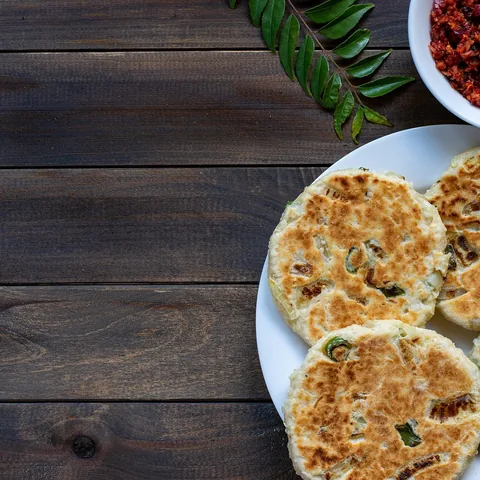
Dhalpuri is a soft, thin flatbread with a thin layer of ground yellow split peas spiced with cumin and garlic folded inside the dough. It is rolled out and cooked on a hot tawa until lightly speckled. In Trinidad it is served as a wrap around curried chickpeas and potato, chicken or goat, or torn and eaten with curry.
Diets
Allergens
Contains (in a typical recipe):
What it is made of
Recipe
Ingredients
- 500 g flour
- 1 tsp baking powder
- 1 tsp salt
- 300 ml water
- 200 g yellow split peas
- 1 tbsp ground cumin
- 3 cloves garlic
- Oil for the griddle
Method
- Boil the split peas until just tender, drain and grind to a dry crumb with the cumin, garlic and salt.
- Mix flour, baking powder, salt and water into a soft dough and rest 30 minutes.
- Divide into 8 balls and flatten each into a cup.
- Fill with a spoon of the ground peas and pinch closed.
- Roll out thin without letting the filling break through.
- Cook on a hot griddle with a little oil, flipping, until golden speckles appear.
How to make it lighter
- Cook with minimal oil.
- Choose whole-wheat flour.
- Fill with vegetable curry instead of meat.
History
Dhalpuri roti traveled from India with indentured workers and became one of the most popular foods on Trinidad. Roti shops sell it wrapped in paper to eat on the go.
Count it in one photo
Point your camera at the table — Me Nutrition recognises Dhalpuri roti and every other dish, with calories and macros for each. Ate only half? Slide it.
Download on the App StoreSimilar dishes
Values are estimates per 100 g for a typical recipe; home and restaurant versions vary. Diets and allergens are worked out from the ingredients of a typical recipe — always check with whoever cooked the dish. Not medical advice. Nutrition data: Me Nutrition dish database v15. How we count →