
Posho and beans (Ugandan maize porridge with bean stew)
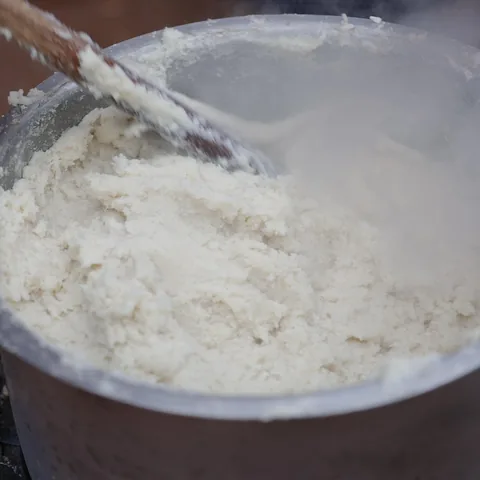
Posho is a stiff porridge of white maize flour cooked in water until it can be cut or shaped, and eaten with a stew of beans simmered with onion and tomato. The porridge is mild and dense and acts as a spoon for the sauce. It is a cheap, filling meal common in schools, workplaces and homes across Uganda.
Diets
Allergens
None of the 14 major allergens in a typical recipe.
What it is made of
Recipe
Ingredients
- 300 g maize flour
- 1 litre water
- 300 g cooked red beans
- 1 onion
- 2 tomatoes
- 2 tbsp oil
- salt
Method
- Fry onion in oil until soft and add tomatoes.
- Add the beans with a little water and simmer 15 minutes, then season.
- Bring the water for posho to a boil and stir in a third of the flour to a paste.
- Add the remaining flour gradually while stirring firmly until very thick.
- Cover and cook 5 minutes, shape into mounds and serve with the beans.
How to make it lighter
- Use wholegrain maize meal for more fibre.
- Beans make this a good vegetable protein meal.
- Add greens such as sukuma wiki to the plate.
History
Maize came to East Africa in the colonial era and became a cheap staple alongside older crops. Posho with beans became standard fare for institutional catering, and it is still an everyday meal for many families.
Count it in one photo
Point your camera at the table — Me Nutrition recognises Posho and beans (Ugandan maize porridge with bean stew) and every other dish, with calories and macros for each. Ate only half? Slide it.
Download on the App StoreSimilar dishes



Values are estimates per 100 g for a typical recipe; home and restaurant versions vary. Diets and allergens are worked out from the ingredients of a typical recipe — always check with whoever cooked the dish. Not medical advice. Nutrition data: Me Nutrition dish database v15. How we count →