
Bograch (Transcarpathian paprika soup)
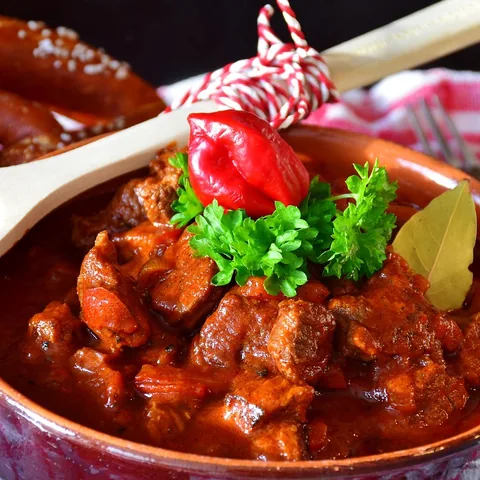
Bograch is a hearty soup from Ukraine's Transcarpathia, traditionally cooked in a cauldron over an open fire. Beef, pork and sometimes veal simmer with onion, sweet and hot peppers, tomato and plenty of paprika, along with potatoes. The result is red, warming and somewhere between a soup and a stew, eaten with fresh bread.
Diets
Allergens
None of the 14 major allergens in a typical recipe.
What it is made of
Recipe
Ingredients
- 400 g beef
- 300 g pork
- 2 onions
- 2 bell peppers
- 1 hot pepper
- 2 tbsp sweet paprika
- 2 tomatoes
- 5 potatoes
- 3 garlic cloves
- 1 tbsp oil
- caraway, salt
Method
- Cut the meat into small cubes.
- Fry the onions in oil, then stir in the paprika off the heat.
- Add the meat and brown it, then pour in water to cover and simmer 40 minutes.
- Add chopped peppers, tomatoes, garlic and caraway.
- Add cubed potatoes and about 1.5 l water; cook until tender.
- Season to taste and rest 10 minutes before serving.
How to make it lighter
- Use lean beef only and skim the fat from the surface.
- Add more peppers and less potato for fewer carbs.
- Adjust the hot pepper for children or sensitive stomachs.
History
The dish reflects the region's close ties with Hungary, and its name comes from the Hungarian word for the cauldron. Bograch cook-off festivals are held in Transcarpathia.
Count it in one photo
Point your camera at the table — Me Nutrition recognises Bograch (Transcarpathian paprika soup) and every other dish, with calories and macros for each. Ate only half? Slide it.
Download on the App StoreSimilar dishes
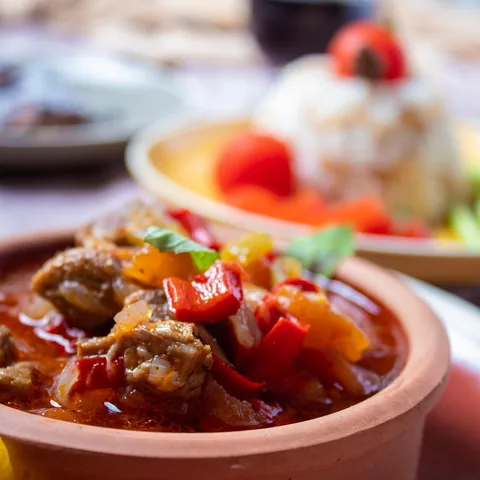

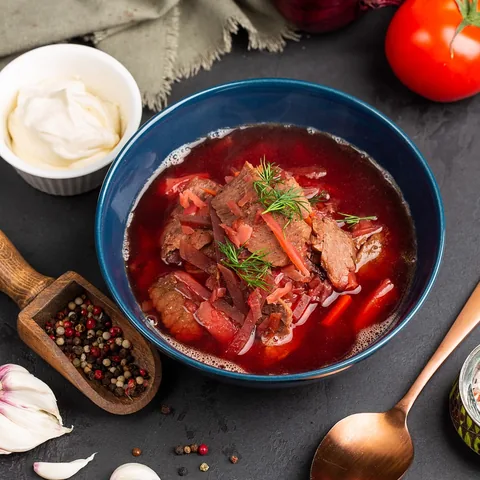
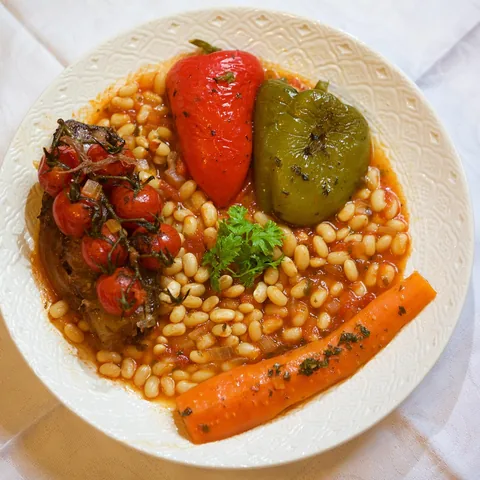
Values are estimates per 100 g for a typical recipe; home and restaurant versions vary. Diets and allergens are worked out from the ingredients of a typical recipe — always check with whoever cooked the dish. Not medical advice. Nutrition data: Me Nutrition dish database v15. How we count →