
Tovchenyky (mashed potatoes with cracklings)
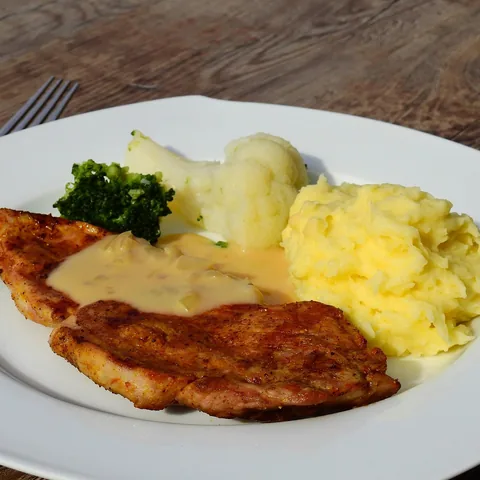
Tovchenyky are coarsely pounded potatoes, traditionally mashed with a wooden pestle and loosened with hot milk. The real character comes from the topping of onion fried in rendered pork fat with crunchy cracklings. It is a simple village side for pickles, sausages or fried fish.
Diets
Allergens
Contains (in a typical recipe):
What it is made of
Recipe
Ingredients
- 1 kg potatoes
- 150 g pork back fat (salo)
- 1 large onion
- 100 ml hot milk
- 20 g butter
- salt, dill
Method
- Peel and boil the potatoes in salted water until soft.
- Dice the salo and render it slowly until crisp cracklings form.
- Add the sliced onion to the fat and fry until golden.
- Drain the potatoes and pound them roughly with butter and hot milk.
- Pile into a bowl and pour the onion and cracklings on top.
- Sprinkle with dill and serve hot.
How to make it lighter
- Use half the salo, or fry the onion in a spoon of oil only.
- Mash with some of the cooking water instead of milk.
- Add steamed cauliflower to the potatoes to lighten the mash.
History
Potatoes became a staple in Ukrainian villages from the nineteenth century, and pounding them with salo fat was an everyday way to make them filling. The name comes from the verb meaning to pound.
Count it in one photo
Point your camera at the table — Me Nutrition recognises Tovchenyky (mashed potatoes with cracklings) and every other dish, with calories and macros for each. Ate only half? Slide it.
Download on the App StoreSimilar dishes
Values are estimates per 100 g for a typical recipe; home and restaurant versions vary. Diets and allergens are worked out from the ingredients of a typical recipe — always check with whoever cooked the dish. Not medical advice. Nutrition data: Me Nutrition dish database v15. How we count →