
Bienmesabe (Venezuelan coconut cream cake)
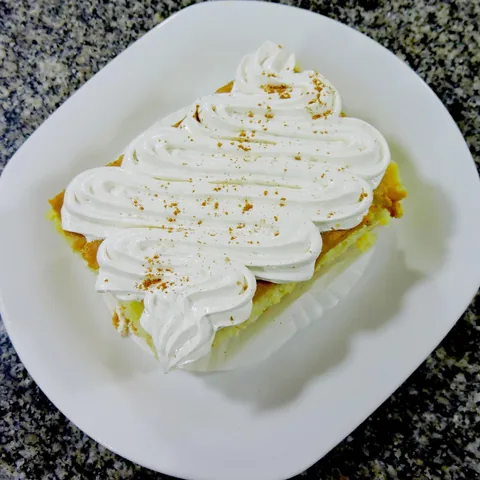
Venezuelan bienmesabe is a layered dessert in which sponge cake or ladyfingers are soaked in a thick, sweet cream of coconut milk and egg yolks. The layers are covered with meringue and dusted with cinnamon. It is soft, moist and intensely coconutty. It is served chilled in squares, often at celebrations.
Diets
Allergens
Contains (in a typical recipe):
What it is made of
Recipe
Ingredients
- 400 ml coconut milk
- 6 egg yolks
- 200 g sugar
- 250 g sponge cake or ladyfingers
- 3 egg whites and 80 g sugar for the meringue
- 1 tsp ground cinnamon
Method
- Heat coconut milk with the sugar until dissolved, then cool slightly.
- Whisk the yolks, add the warm coconut milk gradually and cook gently, stirring, until it coats a spoon.
- Lay half the sponge in a dish and pour over half the cream; repeat.
- Whip the whites with sugar to a glossy meringue and spread on top.
- Dust with cinnamon and chill for at least 3 hours.
How to make it lighter
- Use light coconut milk and reduce the sugar by a third.
- Cut small portions; the dessert is very rich.
- Serve with fresh pineapple or mango to add freshness.
History
The name means it tastes good to me and is shared with other Hispanic desserts, including an almond sweet from the Canary Islands and Spain. The Venezuelan version adopted coconut, which is abundant in the Caribbean.
Count it in one photo
Point your camera at the table — Me Nutrition recognises Bienmesabe (Venezuelan coconut cream cake) and every other dish, with calories and macros for each. Ate only half? Slide it.
Download on the App StoreSimilar dishes

Values are estimates per 100 g for a typical recipe; home and restaurant versions vary. Diets and allergens are worked out from the ingredients of a typical recipe — always check with whoever cooked the dish. Not medical advice. Nutrition data: Me Nutrition dish database v15. How we count →