
Xinjiang big plate chicken (dapanji)
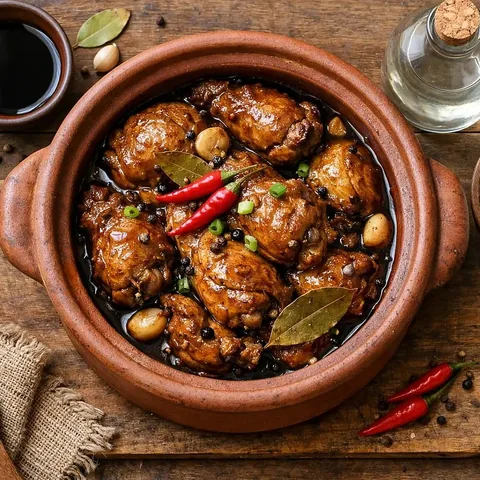
Bone-in chicken is stir-fried with dried chilies, Sichuan pepper and star anise, then stewed with potatoes and peppers into a thick, spicy sauce. It is poured over a bed of wide hand-pulled noodles. The dish is built for sharing.
Diets
Allergens
Contains (in a typical recipe):
What it is made of
Recipe
Ingredients
- 800 g bone-in chicken, chopped
- 400 g potatoes
- 2 bell peppers
- 1 onion
- 6 dried chilies
- 1 tbsp Sichuan peppercorns
- 2 star anise
- 20 g ginger
- 4 garlic cloves
- 2 tbsp soy sauce
- 400 g wide noodles
- oil, salt
Method
- Heat oil and brown the chicken pieces well.
- Add chilies, peppercorns, star anise, ginger and garlic and fry until fragrant.
- Add soy sauce and 400 ml water, cover and simmer 20 minutes.
- Add potatoes and cook 15 minutes more.
- Add onion and peppers for the last 5 minutes.
- Cook the noodles, place on a platter and pour the chicken over.
How to make it lighter
- Remove the chicken skin to cut fat.
- Use fewer noodles and extra peppers.
- Reduce the oil used for browning.
History
Dapanji is a relatively modern dish from Xinjiang that mixes Han and Uyghur styles. It is most associated with the Sha Wan area and long-distance truck stops, and spread across China from there.
Count it in one photo
Point your camera at the table — Me Nutrition recognises Xinjiang big plate chicken (dapanji) and every other dish, with calories and macros for each. Ate only half? Slide it.
Download on the App StoreSimilar dishes
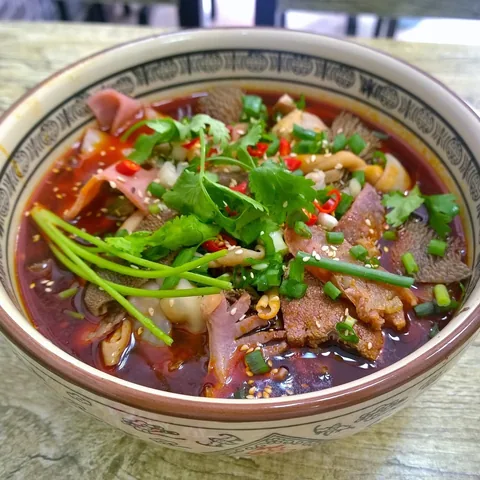
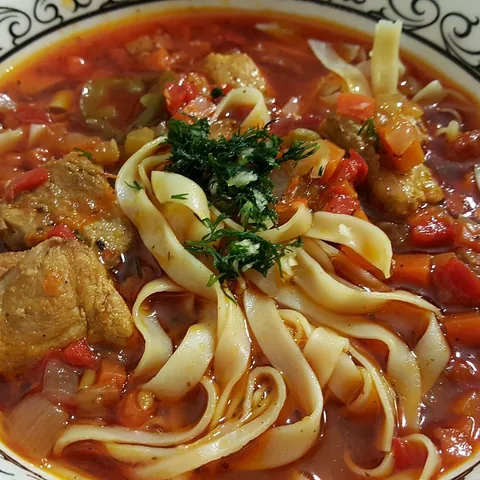
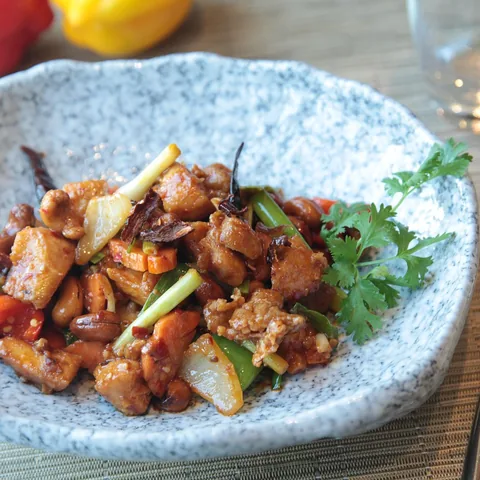
Values are estimates per 100 g for a typical recipe; home and restaurant versions vary. Diets and allergens are worked out from the ingredients of a typical recipe — always check with whoever cooked the dish. Not medical advice. Nutrition data: Me Nutrition dish database v15. How we count →