
Yangzhou lion's head soup (qingdun shizitou)
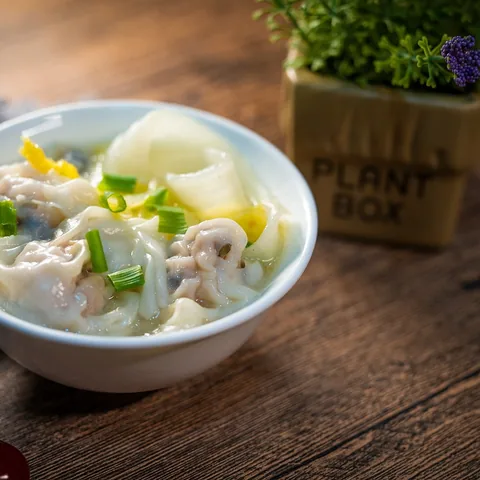
These are very large, tender pork meatballs, simmered gently for hours until they almost fall apart. The broth is clear and sweet with cabbage and ginger. The meatballs are spooned apart and eaten with the soup and a bowl of rice.
Diets
Allergens
Contains (in a typical recipe):
What it is made of
Recipe
Ingredients
- 500 g ground pork (30% fat)
- 300 g napa cabbage
- 15 g ginger
- 2 scallions
- 2 tbsp Shaoxing wine
- 1 egg
- 1 tbsp cornstarch
- 800 ml chicken broth
- salt, white pepper
Method
- Chop the ginger and scallion finely and soak them in a little wine.
- Mix pork with egg, cornstarch, the ginger-wine, salt and pepper, and stir in one direction until sticky.
- Shape four large balls with wet hands.
- Line a pot with cabbage, lay the meatballs on top and pour in hot broth.
- Cover and simmer on very low heat for 2 hours.
- Season and serve in the broth.
How to make it lighter
- Use leaner pork and skim the fat from the broth.
- Add more cabbage or tofu to make each portion lighter.
- Skip the extra salt; the long stewing gives plenty of flavour.
History
It belongs to the Huaiyang cuisine of Jiangsu, known for refined knife work and gentle cooking. The name refers to the round meatball like a lion's head and the cabbage like its mane.
Count it in one photo
Point your camera at the table — Me Nutrition recognises Yangzhou lion's head soup (qingdun shizitou) and every other dish, with calories and macros for each. Ate only half? Slide it.
Download on the App StoreSimilar dishes
Values are estimates per 100 g for a typical recipe; home and restaurant versions vary. Diets and allergens are worked out from the ingredients of a typical recipe — always check with whoever cooked the dish. Not medical advice. Nutrition data: Me Nutrition dish database v15. How we count →