
Acarajé (black-eyed pea fritter)
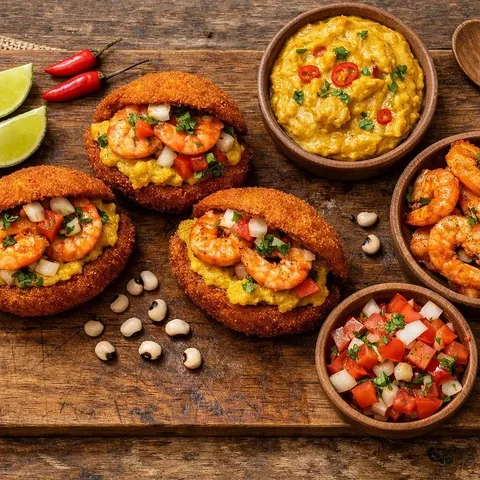
Acarajé is the street food of Salvador da Bahia. Skinned black-eyed peas are ground with onion, whipped into a light batter and fried in dendê oil until crisp and deep orange outside and fluffy inside. The fritter is split and filled with creamy vatapá, okra caruru, dried shrimp, tomato salsa and hot pepper sauce if you like. It is eaten in the hand, hot from the vendor's pan.
Diets
Allergens
Contains (in a typical recipe):
What it is made of
Recipe
Ingredients
- 500 g dried black-eyed peas
- 1 onion (150 g)
- 1 l dendê oil for frying
- 300 g vatapá and 200 g caruru
- 100 g dried shrimp
- hot pepper sauce, salt
Method
- Soak the peas overnight, rub off the skins and rinse them away.
- Grind the peas with the onion and salt into a thick paste, then beat hard for 5–10 minutes until airy.
- Heat the dendê oil and fry spoonfuls of batter until crisp and golden-orange, turning once.
- Drain on paper, then split each fritter open.
- Fill with vatapá, caruru, dried shrimp and pepper sauce and serve hot.
How to make it lighter
- Eat one acarajé as a meal with salad rather than as a snack on top of lunch.
- Ask for less vatapá and more salsa to reduce fat.
- Bake or air-fry the batter as a home version, knowing it will be less crisp.
History
Acarajé comes from the Yoruba bean fritter akara, brought to Brazil by enslaved West Africans, and it is also an offering in Candomblé. It is sold by baianas de acarajé in white dresses, whose trade is registered as Brazilian intangible heritage.
Count it in one photo
Point your camera at the table — Me Nutrition recognises Acarajé (black-eyed pea fritter) and every other dish, with calories and macros for each. Ate only half? Slide it.
Download on the App StoreSimilar dishes
Values are estimates per 100 g for a typical recipe; home and restaurant versions vary. Diets and allergens are worked out from the ingredients of a typical recipe — always check with whoever cooked the dish. Not medical advice. Nutrition data: Me Nutrition dish database v15. How we count →