
Vatapá (Bahian bread and peanut cream)
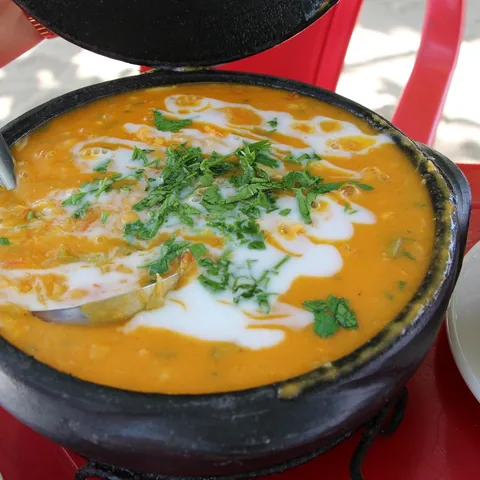
Vatapá is a velvety orange cream that sits somewhere between a sauce and a purée. Soaked bread is cooked with coconut milk, ground peanuts and cashews, dried shrimp, ginger and dendê oil until it thickens and pulls from the pan. It tastes nutty, gently sweet and rich, with a briny shrimp note. It fills acarajé and is served with rice and chicken or fish.
Diets
Allergens
Contains (in a typical recipe):
What it is made of
Recipe
Ingredients
- 250 g stale bread
- 400 ml coconut milk
- 100 g roasted peanuts and 50 g cashews
- 80 g dried shrimp
- 3 tbsp dendê oil (40 ml)
- 1 onion, 15 g ginger, cilantro, salt
Method
- Soak the bread in half the coconut milk and some water until soft.
- Blend the bread with peanuts, cashews, dried shrimp, onion and ginger into a smooth paste.
- Cook the paste in a heavy pan with the rest of the coconut milk, stirring constantly.
- After 15–20 minutes, when thick and glossy, stir in the dendê oil and cilantro.
- Season and serve warm with rice or as a filling for acarajé.
How to make it lighter
- Use it as a sauce in small amounts; it is calorie-dense.
- Replace part of the coconut milk with fish stock for a lighter cream.
- Serve with plenty of vegetables and lean fish to balance the plate.
History
Vatapá is one of the core dishes of Afro-Bahian cooking and is closely tied to the baianas de acarajé. In northern Brazil, especially Pará, a version thickened with flour is eaten at Círio de Nazaré feasts.
Count it in one photo
Point your camera at the table — Me Nutrition recognises Vatapá (Bahian bread and peanut cream) and every other dish, with calories and macros for each. Ate only half? Slide it.
Download on the App StoreSimilar dishes
Values are estimates per 100 g for a typical recipe; home and restaurant versions vary. Diets and allergens are worked out from the ingredients of a typical recipe — always check with whoever cooked the dish. Not medical advice. Nutrition data: Me Nutrition dish database v15. How we count →