
Arepa antioqueña
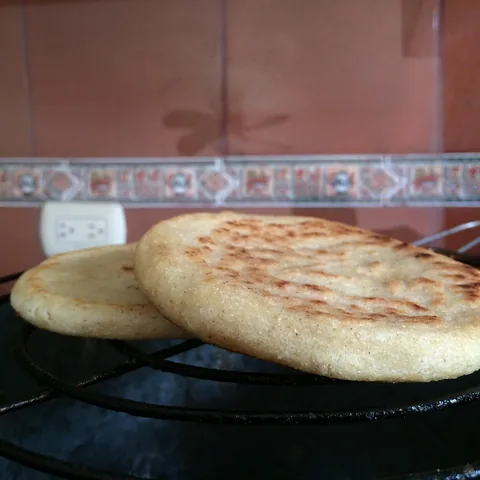
The Antioquian arepa is the humble daily bread of the paisa region: a thin disc of white corn dough without salt or filling, cooked on a griddle or over coals until it has light charred spots. On its own it tastes of toasted corn and is quite neutral, which is the point — it accompanies breakfast eggs, beans, soups and bandeja paisa. A knob of butter or a slice of cheese on top is common.
Diets
Allergens
None of the 14 major allergens in a typical recipe.
What it is made of
Recipe
Ingredients
- 500 g precooked white cornmeal or fresh white-corn dough
- 650 ml warm water
- Pinch of salt (optional)
Method
- Mix the cornmeal with warm water into a soft, pliable dough.
- Rest 5 minutes, then divide into 8 balls.
- Press each ball between sheets of plastic into a thin disc about 0.5 cm thick.
- Cook on a hot, dry griddle 4–5 minutes per side until lightly spotted.
- Serve warm with meals.
How to make it lighter
- Eat it plain or with fresh cheese instead of lots of butter.
- It is naturally fat-free and gluten-free — a good base for a light meal.
- Pair with eggs or beans to add protein.
History
Traditionally it was made from white corn that was boiled, ground at home and shaped by hand, a task repeated every day in rural kitchens of Antioquia. Today most families buy fresh dough or ready-made arepas at the market.
Count it in one photo
Point your camera at the table — Me Nutrition recognises Arepa antioqueña and every other dish, with calories and macros for each. Ate only half? Slide it.
Download on the App StoreSimilar dishes
Values are estimates per 100 g for a typical recipe; home and restaurant versions vary. Diets and allergens are worked out from the ingredients of a typical recipe — always check with whoever cooked the dish. Not medical advice. Nutrition data: Me Nutrition dish database v15. How we count →