
Almojábanas (Colombian cheese corn rolls)
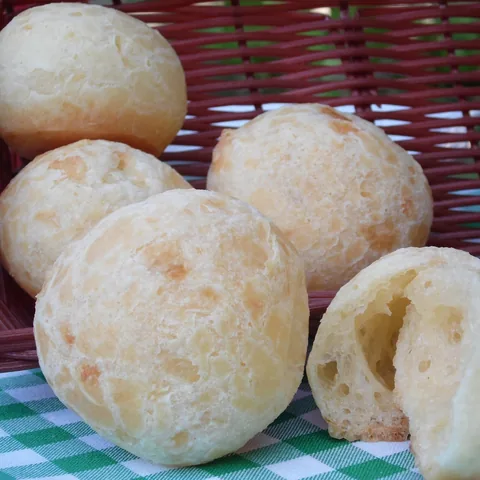
Almojábanas are soft, slightly spongy rolls made from pre-cooked corn flour mixed with plenty of fresh curd cheese, egg and a little butter. Compared with pandebono they are less chewy and more cake-like, with a mild milky flavor. In Colombia they are a breakfast favorite, eaten warm with hot chocolate or coffee.
Diets
Allergens
Contains (in a typical recipe):
What it is made of
Recipe
Ingredients
- 200 g pre-cooked corn flour
- 300 g fresh curd cheese (cuajada), crumbled
- 2 eggs
- 30 g butter, melted
- 100 ml milk
- 1 tbsp sugar
- 1 tsp baking powder, pinch of salt
Method
- Heat the oven to 200 °C.
- Mash the curd cheese finely with your hands or a fork.
- Add the corn flour, sugar, baking powder and salt.
- Mix in the eggs, butter and milk until you have a soft, moist dough.
- Shape into 10 balls and place on a lined tray.
- Bake for 20-25 minutes until lightly golden; serve warm.
How to make it lighter
- Use a light curd cheese or ricotta to lower the fat.
- Skip the butter; the cheese already keeps them moist.
- One almojábana with fruit and coffee makes a moderate breakfast.
History
The name comes from a medieval Spanish cheese pastry of Arabic origin, but the Colombian almojábana is built on corn and local fresh cheese. They are especially associated with the Andean departments of Boyacá and Cundinamarca.
Count it in one photo
Point your camera at the table — Me Nutrition recognises Almojábanas (Colombian cheese corn rolls) and every other dish, with calories and macros for each. Ate only half? Slide it.
Download on the App StoreSimilar dishes
Values are estimates per 100 g for a typical recipe; home and restaurant versions vary. Diets and allergens are worked out from the ingredients of a typical recipe — always check with whoever cooked the dish. Not medical advice. Nutrition data: Me Nutrition dish database v15. How we count →