
Arepa pelúa
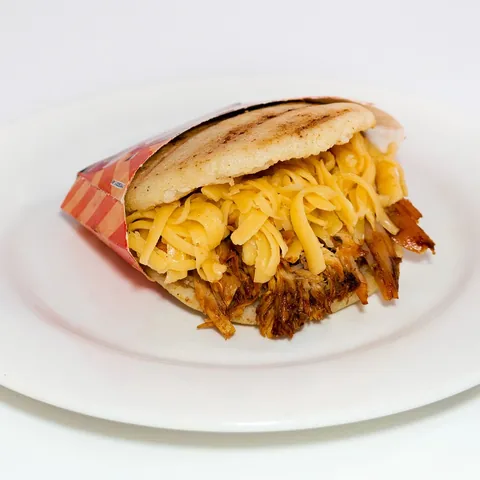
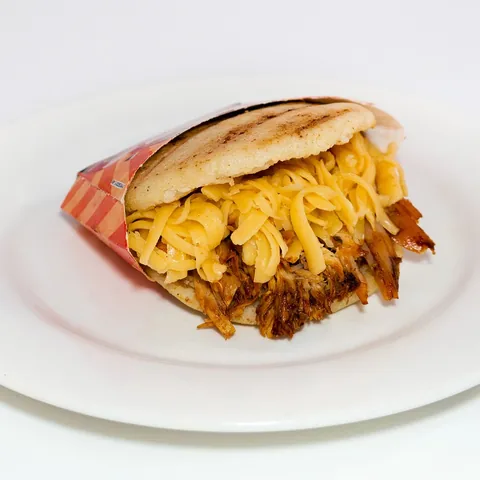
Arepa pelúa means "hairy arepa", a joke about the strands of grated yellow cheese that stick out over the filling. Inside is carne mechada, beef stewed with tomato, onion and peppers and pulled into threads. The hot meat melts the cheese a little, so every bite is juicy, salty and stringy. It is one of the most ordered fillings at Venezuelan areperas.
Diets
Allergens
Contains (in a typical recipe):
What it is made of
Recipe
Ingredients
- 300 g precooked white corn flour
- 380 ml warm water
- 400 g carne mechada (stewed shredded beef)
- 150 g yellow cheese (gouda or cheddar), grated
- salt
Method
- Knead the corn flour with water and salt into a soft dough; shape 6 discs.
- Cook on a hot griddle for 6–7 minutes per side, then finish in a 200 °C oven for 10 minutes.
- Reheat the shredded beef with a little of its sauce.
- Split the arepas and fill with hot beef.
- Pile grated cheese on top so it hangs over the edges and starts to melt.
How to make it lighter
- Use a lean cut like flank for the beef and skim the fat from the stew.
- Cut the cheese to 15 g per arepa; a stronger cheese gives flavour with less.
- Serve with a tomato or cabbage salad instead of fries.
History
The pelúa grew out of two arepera staples, shredded beef and yellow cheese, and its nickname is typical of the humorous way Venezuelans name their arepas. It is now found wherever Venezuelans have opened arepa shops abroad.
Count it in one photo
Point your camera at the table — Me Nutrition recognises Arepa pelúa and every other dish, with calories and macros for each. Ate only half? Slide it.
Download on the App StoreSimilar dishes
Values are estimates per 100 g for a typical recipe; home and restaurant versions vary. Diets and allergens are worked out from the ingredients of a typical recipe — always check with whoever cooked the dish. Not medical advice. Nutrition data: Me Nutrition dish database v15. How we count →