
Pabellón criollo
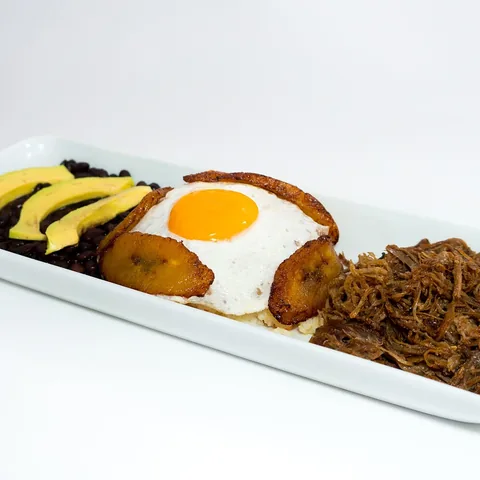
Pabellón criollo is Venezuela's national dish, a full plate built from four parts: shredded stewed beef, black beans, fluffy white rice and slices of fried ripe plantain called tajadas. Each part is cooked separately and arranged side by side, and people mix them in every forkful. The beef is savoury, the beans earthy and slightly sweet, the plantain caramelised. A fried egg on top turns it into a pabellón "a caballo".
Diets
Allergens
None of the 14 major allergens in a typical recipe.
What it is made of
Recipe
Ingredients
- 800 g beef flank
- 400 g dried black beans (or 1 kg cooked)
- 300 g long-grain rice
- 2 ripe plantains (500 g)
- 2 tomatoes, 1 onion, 1 red pepper, 4 garlic cloves
- 20 g panela or brown sugar, 1 tsp cumin
- oil for frying, salt
Method
- Boil the flank in salted water for 1.5–2 hours until tender; cool, keep the broth and shred the meat.
- Fry onion, pepper and garlic, add tomatoes and the shredded beef with some broth and stew 20 minutes.
- Cook the soaked beans until soft, then season with a sofrito, cumin and a little panela.
- Cook the rice with a little oil and salt until fluffy.
- Slice the plantains diagonally and fry until golden and caramelised; drain on paper.
- Serve rice, beans, beef and plantain side by side on each plate.
How to make it lighter
- Bake the plantain slices at 200 °C instead of frying.
- Make the rice portion smaller and the beans bigger for more fibre.
- Skim the fat from the beef broth before using it in the stew.
History
The dish took shape from everyday foods of colonial Venezuela, combining Spanish-style stewed meat, beans and rice with plantain. Its name, meaning "flag" or "pavilion", is often explained by the colours of its parts. It is widely regarded as the national plate.
Count it in one photo
Point your camera at the table — Me Nutrition recognises Pabellón criollo and every other dish, with calories and macros for each. Ate only half? Slide it.
Download on the App StoreSimilar dishes
Values are estimates per 100 g for a typical recipe; home and restaurant versions vary. Diets and allergens are worked out from the ingredients of a typical recipe — always check with whoever cooked the dish. Not medical advice. Nutrition data: Me Nutrition dish database v15. How we count →