
Dulce de leche (milk caramel)
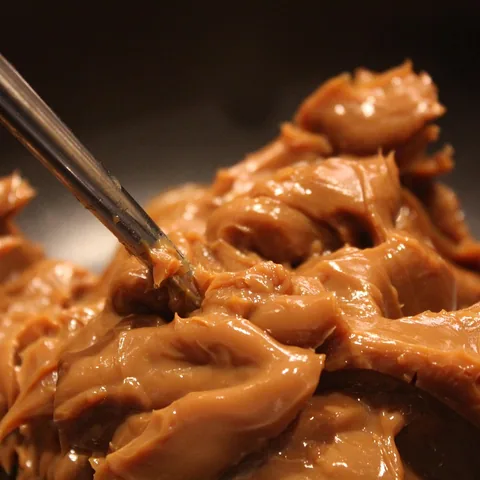
Dulce de leche is made by slowly cooking milk with sugar until it thickens and turns a deep caramel brown. The result is smooth, glossy and intensely sweet, with a milky, toasted flavour. In Argentina it is spread on toast for breakfast, used to fill alfajores, cakes, crêpes and pastries, and even eaten straight from the jar with a spoon.
Diets
Allergens
Contains (in a typical recipe):
What it is made of
Recipe
Ingredients
- 2 litres whole milk
- 500 g sugar
- 1 vanilla pod or 1 tsp extract
- 1/2 tsp baking soda
Method
- Put the milk, sugar and vanilla in a wide heavy pot and bring to a simmer.
- Stir in the baking soda; the milk will foam briefly.
- Cook on low heat, stirring often, for 2–3 hours.
- As it thickens and darkens, stir constantly so it does not catch.
- Stop when a drop on a cold plate holds its shape.
- Pour into clean jars and cool.
How to make it lighter
- Use semi-skimmed milk for a slightly lighter spread.
- Measure a single teaspoon on toast instead of spreading freely.
- Pair a small amount with fresh fruit or plain yogurt.
History
Dulce de leche is common across Latin America, and several countries, including Argentina and Uruguay, claim it as their own. A popular Argentine story places its invention in the nineteenth century, but it is generally treated as legend. In Argentina it is considered a national symbol and is produced on a large industrial scale.
Count it in one photo
Point your camera at the table — Me Nutrition recognises Dulce de leche (milk caramel) and every other dish, with calories and macros for each. Ate only half? Slide it.
Download on the App StoreSimilar dishes

Values are estimates per 100 g for a typical recipe; home and restaurant versions vary. Diets and allergens are worked out from the ingredients of a typical recipe — always check with whoever cooked the dish. Not medical advice. Nutrition data: Me Nutrition dish database v15. How we count →