
Fugazza (Argentine onion pizza)
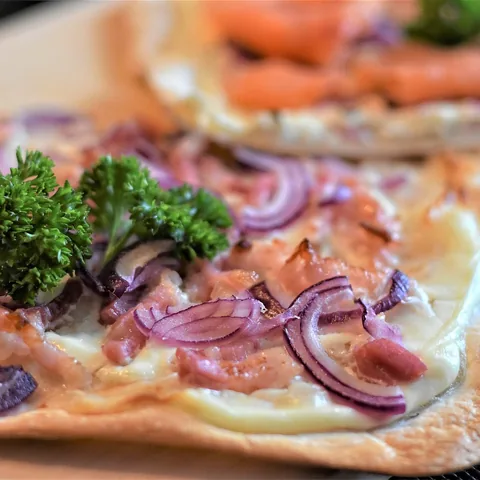
Fugazza is a Buenos Aires pizza with no tomato and usually no cheese: a thick, soft crust topped with a deep layer of thinly sliced onions, olive oil and oregano. In the oven the onions soften and caramelise at the edges, giving a sweet, savoury flavour. It is sold by the slice in classic pizzerias and is often eaten standing at the counter with a slice of fainá.
Diets
Allergens
Contains (in a typical recipe):
What it is made of
Recipe
Ingredients
- 500 g bread flour
- 320 ml warm water
- 7 g dry yeast
- 30 ml olive oil plus more for the pan
- 10 g salt
- 3 large white onions, thinly sliced
- 1 tsp dried oregano
- 20 g grated parmesan (optional)
Method
- Mix the flour, water, yeast, oil and salt and knead into a soft dough.
- Let it rise for about 1 hour until doubled.
- Salt the sliced onions and leave them for 20 minutes, then squeeze out the liquid.
- Press the dough into an oiled round pan and let it rise again for 30 minutes.
- Cover thickly with the onions and drizzle with oil.
- Bake at 230 °C for 20–25 minutes, then sprinkle with oregano and cheese.
How to make it lighter
- Use part whole-wheat flour for more fibre.
- Brush the onions with oil instead of pouring it.
- Pair a slice with a salad to make a balanced meal.
History
The name comes from fugassa, the Genoese word for focaccia, and the dish was developed by Ligurian immigrants in Buenos Aires. Over time it took on a pizza shape and became one of the city's signature pizzeria styles. It also gave rise to the cheese-stuffed fugazzeta.
Count it in one photo
Point your camera at the table — Me Nutrition recognises Fugazza (Argentine onion pizza) and every other dish, with calories and macros for each. Ate only half? Slide it.
Download on the App StoreSimilar dishes
Values are estimates per 100 g for a typical recipe; home and restaurant versions vary. Diets and allergens are worked out from the ingredients of a typical recipe — always check with whoever cooked the dish. Not medical advice. Nutrition data: Me Nutrition dish database v15. How we count →