
Pancho (Argentine hot dog)
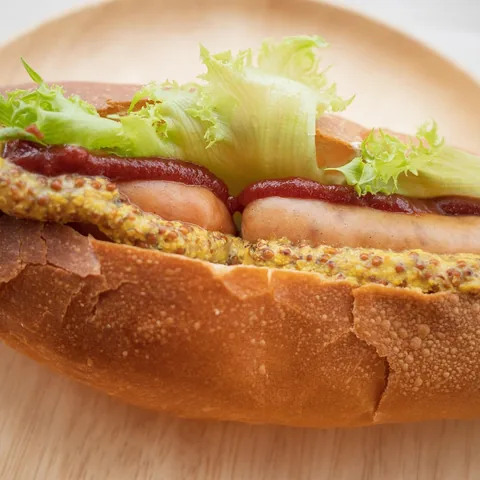
A pancho is Argentina's take on the hot dog and a staple at kiosks, stadiums, bus stations and children's parties. A boiled frankfurter goes into a long, soft bun, and customers add their own sauces from squeeze bottles: mayonnaise, mustard, ketchup and sometimes salsa golf. The finishing touch is a handful of papas pay, very thin crunchy potato sticks scattered on top. It is cheap, quick and eaten in a few bites.
Diets
Allergens
Contains (in a typical recipe):
What it is made of
Recipe
Ingredients
- 4 frankfurters
- 4 long soft hot dog buns
- 40 g potato sticks
- mayonnaise, mustard and ketchup to taste
Method
- Bring a pot of water to a simmer.
- Heat the frankfurters for 5 minutes without boiling hard.
- Warm the buns briefly in the oven or steam.
- Place a sausage in each bun.
- Add sauces to taste and top with potato sticks.
How to make it lighter
- Choose chicken or reduced-fat frankfurters.
- Use mustard and ketchup instead of mayonnaise.
- Swap the potato sticks for sliced tomato or cabbage slaw.
History
Sausages in buns spread to Argentina in the twentieth century following the popularity of the American hot dog. The local name pancho is widely used across Argentina, Uruguay and Paraguay, and the potato-stick topping is a typical Río de la Plata addition.
Count it in one photo
Point your camera at the table — Me Nutrition recognises Pancho (Argentine hot dog) and every other dish, with calories and macros for each. Ate only half? Slide it.
Download on the App StoreSimilar dishes
Values are estimates per 100 g for a typical recipe; home and restaurant versions vary. Diets and allergens are worked out from the ingredients of a typical recipe — always check with whoever cooked the dish. Not medical advice. Nutrition data: Me Nutrition dish database v15. How we count →