
Tereré (cold mate)
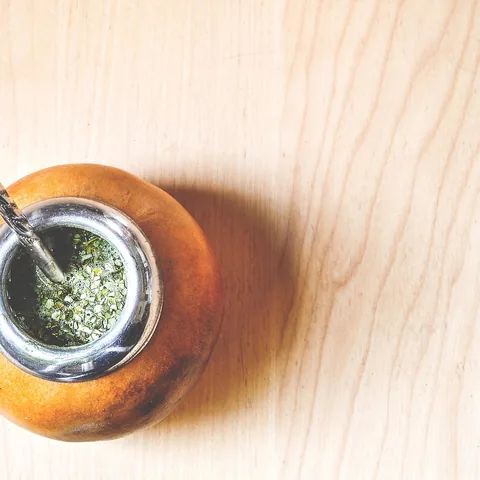
Tereré is the summer version of mate, prepared with iced water or chilled fruit juice instead of hot water. It is served in a gourd or a horn cup with a bombilla and passed around just like hot mate. Orange, grapefruit or pineapple juice and crushed mint or lemon verbena are common additions. It is refreshing, lightly bitter and very popular in the hot Litoral provinces such as Corrientes and Misiones.
Diets
Allergens
None of the 14 major allergens in a typical recipe.
What it is made of
Recipe
Ingredients
- 50 g yerba mate
- 500 ml cold orange or grapefruit juice
- 500 ml iced water
- A handful of fresh mint
- Ice cubes
Method
- Fill a large jug with ice, juice, water and lightly crushed mint.
- Fill a gourd or cup two thirds full with yerba.
- Tilt it to form a slope and insert the bombilla.
- Pour in the cold liquid from the jug.
- Sip, refill and share around the group.
How to make it lighter
- Use mostly water and only a splash of juice to cut sugar.
- Herbs like mint or lemon verbena add flavour without calories.
- Prepare a large jug in advance so you never add sugar on impulse.
History
Tereré is shared with neighbouring Paraguay, where it is a recognised national tradition, and is linked to the Guaraní heritage of the region. In north-eastern Argentina it is part of everyday life during the long hot season.
Count it in one photo
Point your camera at the table — Me Nutrition recognises Tereré (cold mate) and every other dish, with calories and macros for each. Ate only half? Slide it.
Download on the App StoreSimilar dishes

Values are estimates per 100 g for a typical recipe; home and restaurant versions vary. Diets and allergens are worked out from the ingredients of a typical recipe — always check with whoever cooked the dish. Not medical advice. Nutrition data: Me Nutrition dish database v15. How we count →