
Yerba mate (Mate)
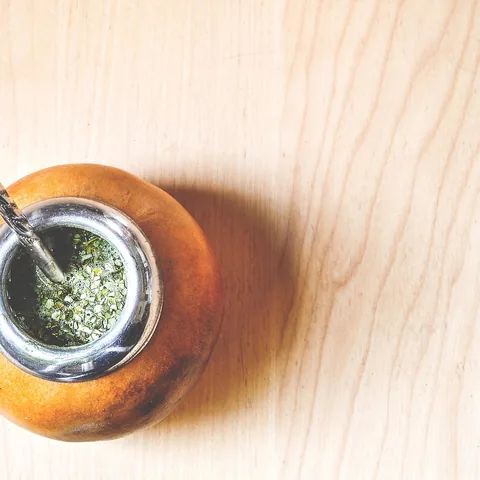
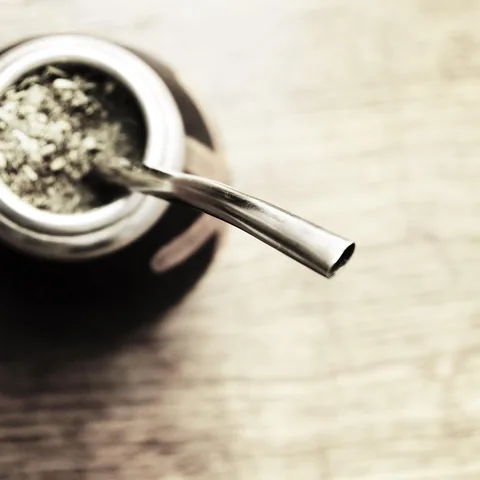
Mate is Argentina's national drink: dried, chopped leaves of the yerba mate plant steeped in hot, not boiling, water in a gourd and sipped through a metal straw called a bombilla. It tastes grassy, bitter and slightly smoky, and contains caffeine. One person, the cebador, refills the gourd with water and passes it around the group. It is drunk all day, at home, at work and in parks.
Diets
Allergens
None of the 14 major allergens in a typical recipe.
What it is made of
Recipe
Ingredients
- 50 g yerba mate
- 1 litre water at 70–80 °C
Method
- Fill the gourd about two thirds full with yerba.
- Cover the top with your hand, shake and tilt the gourd so the yerba forms a slope.
- Pour a little warm water into the low side and let it absorb.
- Insert the bombilla into the wet side and fill with hot water.
- Sip until empty, then refill and pass to the next person.
How to make it lighter
- Drink it without sugar to keep it practically calorie-free.
- Never use boiling water; it makes the mate harsh and burns the leaves.
- Limit late-evening mate because of its caffeine.
History
The Guaraní people drank yerba mate long before Europeans arrived, and Jesuit missions later cultivated the plant on a large scale. Today Argentina is the world's largest producer of yerba mate, and sharing a mate is a central social ritual.
Count it in one photo
Point your camera at the table — Me Nutrition recognises Yerba mate (Mate) and every other dish, with calories and macros for each. Ate only half? Slide it.
Download on the App StoreSimilar dishes
Values are estimates per 100 g for a typical recipe; home and restaurant versions vary. Diets and allergens are worked out from the ingredients of a typical recipe — always check with whoever cooked the dish. Not medical advice. Nutrition data: Me Nutrition dish database v15. How we count →