
Torta Rogel
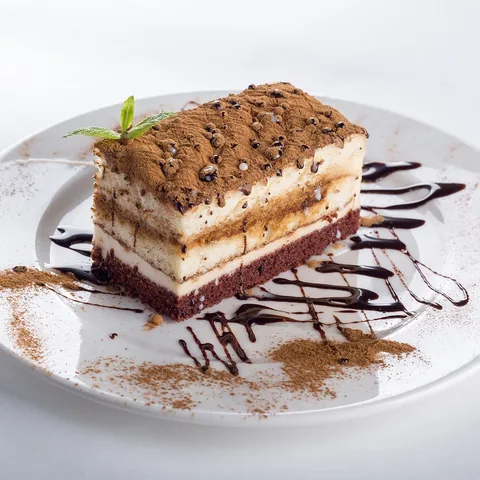
Rogel is a tall Argentine cake made of eight or more paper-thin, crisp discs of pastry. Each layer is spread with dulce de leche, and the top is covered with glossy Italian meringue. The pastry stays brittle while the caramel filling softens it slightly, giving a crunchy, very sweet slice. It is a favourite for birthdays and Sunday family gatherings.
Diets
Allergens
Contains (in a typical recipe):
What it is made of
Recipe
Ingredients
- 300 g flour
- 6 egg yolks
- 50 g butter, melted
- 3 tbsp water
- 1 kg dulce de leche
- 3 egg whites and 180 g sugar for the meringue
Method
- Knead flour, yolks, butter and water into a smooth dough; rest 30 minutes.
- Divide into 8 pieces and roll each into a very thin 24 cm disc; prick with a fork.
- Bake each disc at 200 °C for 5–7 minutes until golden and crisp.
- Stack the discs, spreading dulce de leche between each layer.
- Cook the sugar to a syrup, whip it into the egg whites, spread the meringue on top and brown lightly.
How to make it lighter
- Use fewer layers for a lower, lighter cake.
- Spread the dulce de leche thinly; the layers still stick.
- Cut thin wedges: a 70–80 g slice is very satisfying.
History
The cake belongs to the tradition of milhojas desserts popular in Argentine bakeries. Its origin story is told in different ways, but it has long been one of the country's best-known cakes.
Count it in one photo
Point your camera at the table — Me Nutrition recognises Torta Rogel and every other dish, with calories and macros for each. Ate only half? Slide it.
Download on the App StoreSimilar dishes
Values are estimates per 100 g for a typical recipe; home and restaurant versions vary. Diets and allergens are worked out from the ingredients of a typical recipe — always check with whoever cooked the dish. Not medical advice. Nutrition data: Me Nutrition dish database v15. How we count →