
Bastegh (Armenian grape fruit leather)
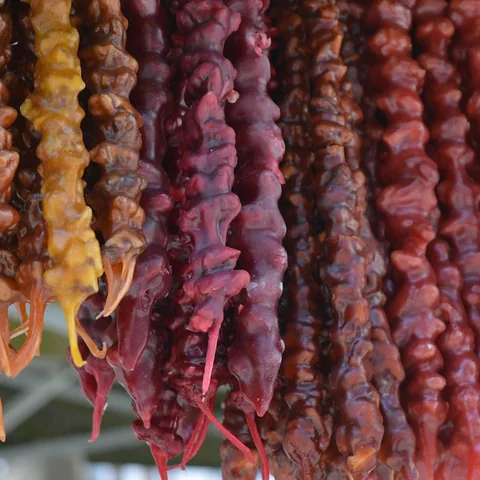
Bastegh is a sheet of dried fruit paste, thin as fabric and slightly chewy. Grape or mulberry juice is cooked with a little flour or starch until thick, spread on cloth and left to dry in the sun. The result tastes deeply of the fruit, sweet with a gentle tartness. It is torn into pieces with tea, used to wrap walnuts, or rolled around churchkhela-style strings.
Diets
Allergens
Contains (in a typical recipe):
What it is made of
Recipe
Ingredients
- 2 l fresh grape or mulberry juice
- 100 g flour or 60 g cornstarch
- 50 g sugar (optional)
- a little oil for the trays
Method
- Boil the juice and reduce it by about a third.
- Whisk the flour with some cool juice to a smooth slurry.
- Stir the slurry into the hot juice and cook on low heat, stirring, until thick like custard.
- Spread a 2–3 mm layer on oiled trays or cloth.
- Dry in the sun for 2–3 days or in an oven at 60 °C for 6–8 hours, then peel and cut into sheets.
How to make it lighter
- Skip the sugar: ripe grapes are sweet enough.
- Eat it in small pieces as a replacement for candy.
- Roll it around a few walnuts for added protein and fat that slow the sugar rush.
History
Bastegh is an autumn product of Armenian villages, made during the grape harvest from the same thickened juice used for sujukh. Similar fruit leathers are known across the Caucasus, Iran and Anatolia.
Count it in one photo
Point your camera at the table — Me Nutrition recognises Bastegh (Armenian grape fruit leather) and every other dish, with calories and macros for each. Ate only half? Slide it.
Download on the App StoreSimilar dishes
Values are estimates per 100 g for a typical recipe; home and restaurant versions vary. Diets and allergens are worked out from the ingredients of a typical recipe — always check with whoever cooked the dish. Not medical advice. Nutrition data: Me Nutrition dish database v15. How we count →