
Mushurba (wheat and chickpea pudding)
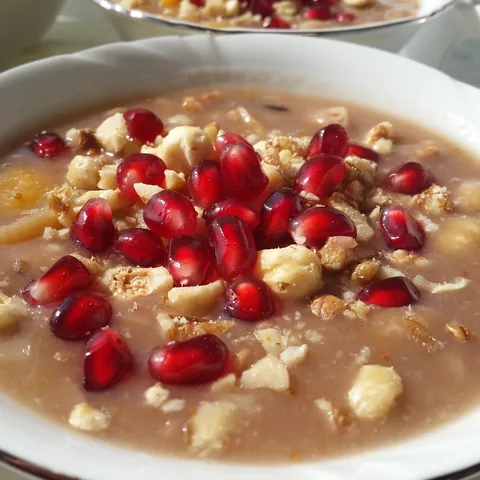
Mushurba is a spoonable sweet made from whole wheat grains and chickpeas cooked slowly until the starch thickens the liquid. Sugar, raisins and cinnamon are stirred in, and it is topped with chopped walnuts. The result is warm, mildly sweet and pleasantly chewy, somewhere between porridge and pudding. It is served warm or cooled, in small bowls.
Diets
Allergens
Contains (in a typical recipe):
What it is made of
Recipe
Ingredients
- 200 g whole wheat berries, soaked overnight
- 100 g dried chickpeas, soaked overnight
- 2 l water
- 120 g sugar
- 60 g raisins
- 1 tsp cinnamon
- 60 g walnuts, chopped
Method
- Cook the chickpeas in fresh water for 1 hour until soft; drain.
- Simmer the wheat in 2 l water for about 1 hour, stirring now and then, until creamy.
- Add chickpeas, sugar and raisins and cook 20 minutes more, stirring often.
- Stir in cinnamon and pour into bowls.
- Top with walnuts and serve warm or at room temperature.
How to make it lighter
- Use 70 g sugar and add sweetness with extra raisins or chopped dried apricots.
- Wheat and chickpeas give plenty of fibre — a small bowl is very filling.
- Cook the grains in a pressure cooker to save an hour.
History
Sweet wheat puddings are made across Armenia and its neighbours, and recipes vary by village and family. Mushurba is often prepared for gatherings and religious holidays, when a big pot is shared.
Count it in one photo
Point your camera at the table — Me Nutrition recognises Mushurba (wheat and chickpea pudding) and every other dish, with calories and macros for each. Ate only half? Slide it.
Download on the App StoreSimilar dishes
Values are estimates per 100 g for a typical recipe; home and restaurant versions vary. Diets and allergens are worked out from the ingredients of a typical recipe — always check with whoever cooked the dish. Not medical advice. Nutrition data: Me Nutrition dish database v15. How we count →