
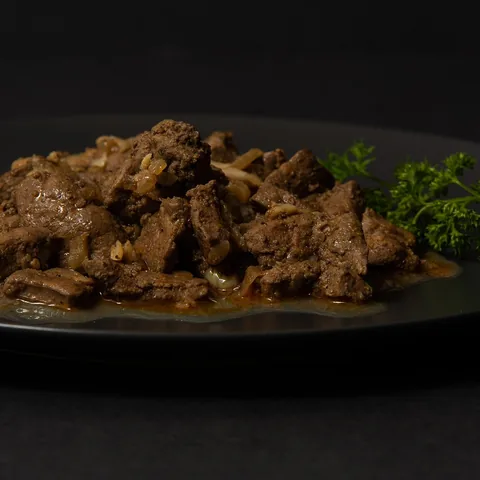
Ghaurma (lamb preserved in its fat)
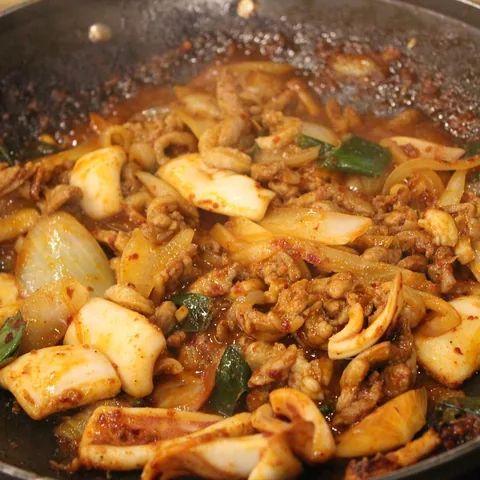
Ghaurma is lamb or mutton cut into pieces, salted and cooked slowly in rendered tail fat until tender and browned, then packed into jars and sealed under the fat. It keeps for months in a cool place. Spoonfuls are reheated to fry eggs, enrich pilaf or bulgur, or eaten with lavash and onions. The flavour is deeply meaty and savoury.
Diets
Allergens
None of the 14 major allergens in a typical recipe.
What it is made of
Recipe
Ingredients
- 2 kg boneless lamb shoulder, in 3 cm pieces
- 500 g lamb tail fat or lard, diced
- 25 g salt
- 1 tsp black pepper
Method
- Render the diced fat in a heavy pot over low heat; remove the crackling.
- Salt the meat and add it to the hot fat.
- Cook uncovered over low heat for 2–2½ hours, stirring now and then, until the juices evaporate and the meat is tender and lightly browned.
- Season with pepper and pack the meat into clean jars.
- Cover completely with the hot fat, cool and keep in a cool, dark place or the fridge.
How to make it lighter
- Lift the meat out of the fat and drain it on paper before eating.
- Use small amounts as a flavouring for bulgur or beans rather than a main portion.
- Pair it with lots of fresh herbs, onions and vegetables.
History
Preserving meat in fat after the autumn slaughter was a common practice in rural Armenia, as in much of the Caucasus and Anatolia, before refrigeration. Ghaurma remains a village favourite and a taste of home for many families.
Count it in one photo
Point your camera at the table — Me Nutrition recognises Ghaurma (lamb preserved in its fat) and every other dish, with calories and macros for each. Ate only half? Slide it.
Download on the App StoreSimilar dishes
Values are estimates per 100 g for a typical recipe; home and restaurant versions vary. Diets and allergens are worked out from the ingredients of a typical recipe — always check with whoever cooked the dish. Not medical advice. Nutrition data: Me Nutrition dish database v15. How we count →