
Kyalla (lamb head and trotter soup)
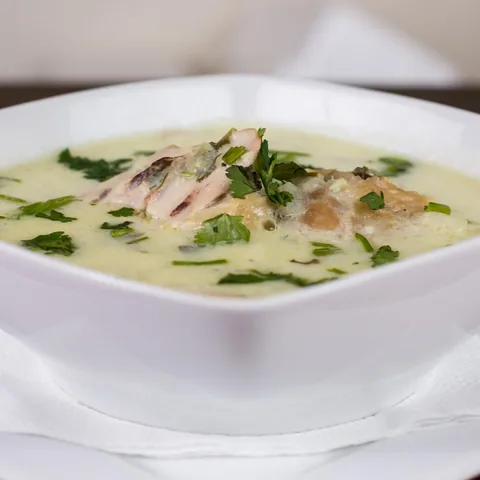
Kyalla is a hearty winter soup made by simmering a cleaned lamb head and trotters for hours until the meat falls off the bones. The broth becomes thick and silky from the gelatin. It is served very hot with crushed garlic, salt and dried lavash, and is closely related to khash and kelle paça.
Diets
Allergens
None of the 14 major allergens in a typical recipe.
What it is made of
Recipe
Ingredients
- 1 cleaned lamb head (about 1.5 kg)
- 4 lamb trotters (about 800 g)
- 100 g chickpeas, soaked
- 1 onion (120 g)
- 3 l water
- 1 head garlic
- salt and black pepper
- dried lavash to serve
Method
- Singe and scrub the head and trotters, then soak them in cold water for several hours, changing it.
- Cover with fresh water, bring to a boil and skim off the foam.
- Add the whole onion and simmer on low heat for 4–5 hours.
- Add the chickpeas for the last hour of cooking.
- Lift out the bones, pick off the meat and return it to the broth.
- Season and serve very hot with crushed garlic and broken dried lavash.
How to make it lighter
- Chill the broth and lift off the hardened fat before reheating.
- Go easy on salt at the table; the garlic gives plenty of flavour.
- Eat it with a fresh herb salad instead of large amounts of lavash.
History
Using every part of the animal was a matter of thrift in mountain households, and head-and-trotter soups are known across Armenia, Turkey and Iran. The name comes from the word for head used in several regional languages.
Count it in one photo
Point your camera at the table — Me Nutrition recognises Kyalla (lamb head and trotter soup) and every other dish, with calories and macros for each. Ate only half? Slide it.
Download on the App StoreSimilar dishes
Values are estimates per 100 g for a typical recipe; home and restaurant versions vary. Diets and allergens are worked out from the ingredients of a typical recipe — always check with whoever cooked the dish. Not medical advice. Nutrition data: Me Nutrition dish database v15. How we count →