
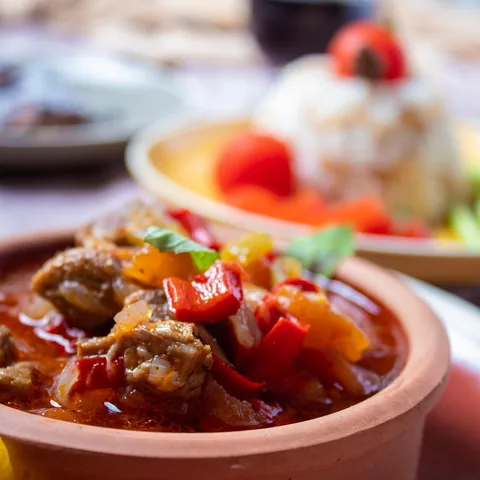
Putuk (lamb and chickpea soup in clay pots)
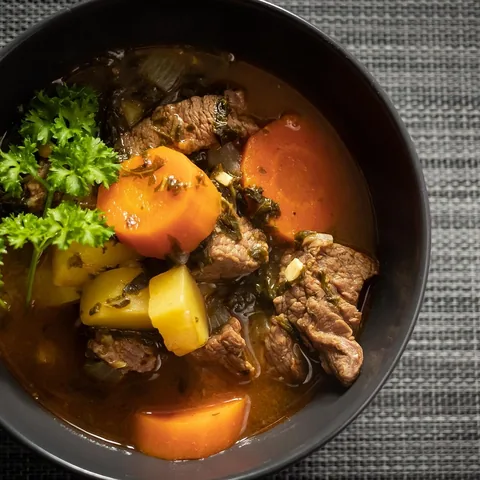
Putuk is a thick lamb soup cooked in small individual clay pots, with chickpeas, potato, onion and often a couple of prunes or a little tomato. The slow, gentle heat of the oven turns the broth rich and the meat meltingly soft. Traditionally the broth is first poured over torn bread, and the meat and vegetables are mashed and eaten separately.
Diets
Allergens
None of the 14 major allergens in a typical recipe.
What it is made of
Recipe
Ingredients
- 600 g lamb with some bone, in pieces
- 150 g chickpeas, soaked overnight
- 2 potatoes, in chunks
- 1 onion, chopped
- 1 tomato, chopped
- 4 prunes
- Salt, pepper, dried mint
Method
- Divide the lamb and drained chickpeas between 4 clay pots.
- Cover with water, season and bake covered at 170 °C for 1.5 hours.
- Add potato, onion, tomato and a prune to each pot.
- Return to the oven for another hour until the meat is very tender.
- Sprinkle with dried mint.
- Serve the broth first, then the meat and vegetables.
How to make it lighter
- Skim the fat from the top of each pot before serving.
- Use lean lamb shoulder trimmed of fat.
- Add extra chickpeas and less meat for more fibre.
History
Putuk is closely related to the piti of Azerbaijan and the abgoosht of Iran, all part of a shared regional tradition of pot-cooked lamb soups. In Armenia it is often associated with older regional and tavern cooking.
Count it in one photo
Point your camera at the table — Me Nutrition recognises Putuk (lamb and chickpea soup in clay pots) and every other dish, with calories and macros for each. Ate only half? Slide it.
Download on the App StoreSimilar dishes
Values are estimates per 100 g for a typical recipe; home and restaurant versions vary. Diets and allergens are worked out from the ingredients of a typical recipe — always check with whoever cooked the dish. Not medical advice. Nutrition data: Me Nutrition dish database v15. How we count →