
Arroz tapado (Peruvian rice mould with beef)
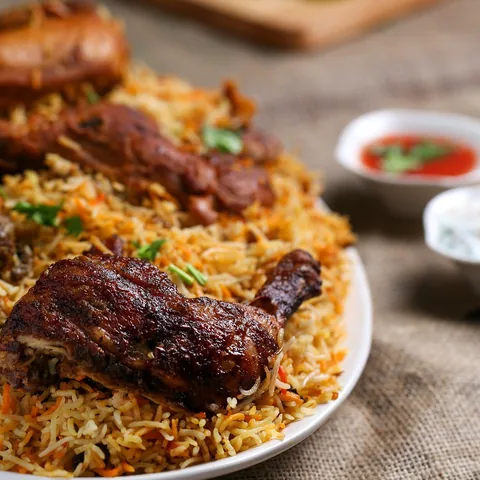
Arroz tapado means 'covered rice': a layer of garlicky white rice, a layer of picadillo, and more rice on top, all pressed into a bowl and turned out onto the plate. The beef filling is cooked with onion, ají panca and cumin, then studded with raisins, black olives and chopped hard-boiled egg. Sweet, salty and savoury notes meet in each bite. It is a favourite home lunch, often served with a fried egg or plantain.
Diets
Allergens
Contains (in a typical recipe):
What it is made of
Recipe
Ingredients
- 400 g rice
- 400 g lean ground beef
- 1 onion (150 g), finely chopped
- 2 garlic cloves
- 1 tbsp ají panca paste
- 40 g raisins
- 50 g black olives, chopped
- 2 hard-boiled eggs
- 1 tsp cumin
- 2 tbsp oil, salt, parsley
Method
- Cook the rice with a little garlic and salt until fluffy.
- Fry onion, garlic, ají panca and cumin in oil for 5 minutes.
- Add the beef and cook until browned and dry; stir in raisins and olives.
- Chop the eggs and fold them into the filling with parsley.
- Press a layer of rice into an oiled bowl, add filling, then more rice.
- Turn out onto a plate and serve with salad.
How to make it lighter
- Use extra-lean beef and drain any fat after browning.
- Swap half the rice for brown rice for more fibre.
- Serve with a large salad instead of a fried egg.
History
Arroz tapado is a thrifty Lima home dish, a way to stretch a little meat over many plates. The combination of raisins, olives and egg in the filling is shared with Peruvian empanadas and tamales.
Count it in one photo
Point your camera at the table — Me Nutrition recognises Arroz tapado (Peruvian rice mould with beef) and every other dish, with calories and macros for each. Ate only half? Slide it.
Download on the App StoreSimilar dishes
Values are estimates per 100 g for a typical recipe; home and restaurant versions vary. Diets and allergens are worked out from the ingredients of a typical recipe — always check with whoever cooked the dish. Not medical advice. Nutrition data: Me Nutrition dish database v15. How we count →