
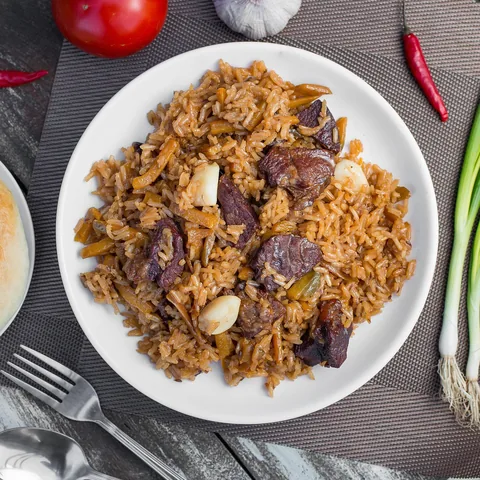
Bozartma (chicken stewed with onion and tomato)
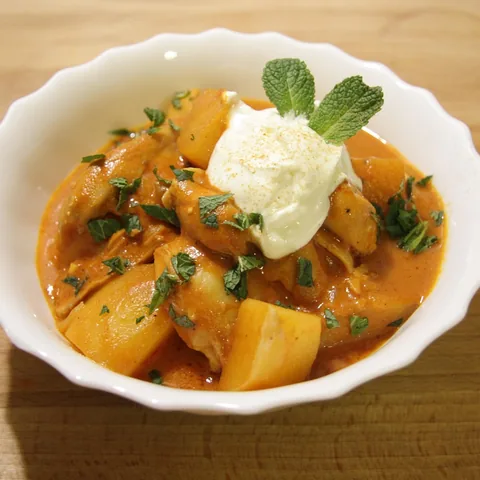
Bozartma is a simple stew in which chicken or lamb is first browned and then cooked slowly with a large amount of onion and tomatoes. The onion melts into a thick, sweet sauce coloured with saffron and turmeric. Fresh herbs are scattered on top before serving. It goes well with plain rice or bread.
Diets
Allergens
Contains (in a typical recipe):
What it is made of
Recipe
Ingredients
- 1 kg chicken pieces
- 4 onions
- 4 tomatoes
- 30 g butter
- a pinch of saffron
- ½ tsp turmeric
- cilantro, salt, pepper
Method
- Brown the chicken in the butter in a heavy pot.
- Add the sliced onions and cook covered on low heat for 15 minutes.
- Add the chopped tomatoes, turmeric, salt and pepper.
- Simmer covered for 40 minutes until the chicken is very tender.
- Stir in the infused saffron and cook 5 minutes more.
- Sprinkle with cilantro and serve.
How to make it lighter
- Remove the chicken skin before browning.
- Use a spoon of oil instead of butter.
- Serve with salad or bulgur instead of a large portion of rice.
History
Bozartma is a traditional Azerbaijani way of stewing meat, known in both chicken and lamb versions. The name is linked to the browning of the meat before stewing.
Count it in one photo
Point your camera at the table — Me Nutrition recognises Bozartma (chicken stewed with onion and tomato) and every other dish, with calories and macros for each. Ate only half? Slide it.
Download on the App StoreSimilar dishes
Values are estimates per 100 g for a typical recipe; home and restaurant versions vary. Diets and allergens are worked out from the ingredients of a typical recipe — always check with whoever cooked the dish. Not medical advice. Nutrition data: Me Nutrition dish database v15. How we count →