
Dovga (Azerbaijani herb and yogurt soup)
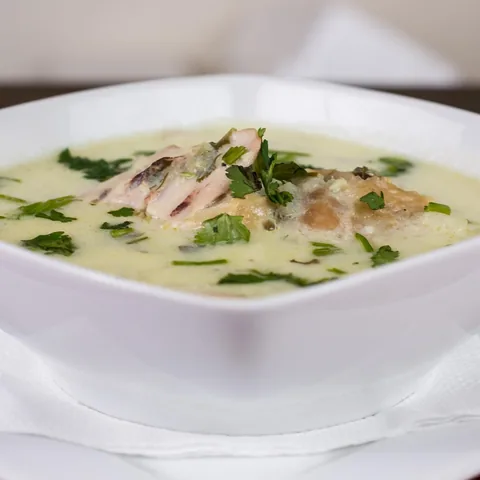
Dovga is a creamy, tangy soup of yogurt thinned with water, thickened with a little rice and stabilised with egg so it does not curdle. Large handfuls of chopped dill, mint, coriander and spinach go in, along with cooked chickpeas. It is refreshing and light, served hot in winter and chilled in summer, often after a heavy meal.
Diets
Allergens
Contains (in a typical recipe):
What it is made of
Recipe
Ingredients
- 1 kg plain yogurt
- 800 ml water
- 60 g rice
- 1 egg
- 150 g cooked chickpeas
- 200 g spinach
- 60 g dill, mint and coriander
- salt
Method
- Whisk the yogurt, water, egg and rinsed rice in a pot until smooth.
- Heat on medium, stirring constantly in one direction, until it comes to a gentle boil.
- Lower the heat and simmer 15 minutes until the rice is soft, still stirring often.
- Add the chopped spinach and herbs and cook 5 minutes more.
- Stir in the chickpeas, season with salt and serve hot or chilled.
How to make it lighter
- Use low-fat yogurt; the egg keeps it from splitting.
- Add more spinach and herbs for extra fibre.
- Enjoy it as a light dinner on its own.
History
Dovga is one of the most loved soups of Azerbaijani cuisine and is served at weddings and feasts as a digestive. Constant stirring in one direction while it heats is the traditional secret to keeping it smooth.
Count it in one photo
Point your camera at the table — Me Nutrition recognises Dovga (Azerbaijani herb and yogurt soup) and every other dish, with calories and macros for each. Ate only half? Slide it.
Download on the App StoreSimilar dishes
Values are estimates per 100 g for a typical recipe; home and restaurant versions vary. Diets and allergens are worked out from the ingredients of a typical recipe — always check with whoever cooked the dish. Not medical advice. Nutrition data: Me Nutrition dish database v15. How we count →