
Plov with gazmag (crispy-crust plov)
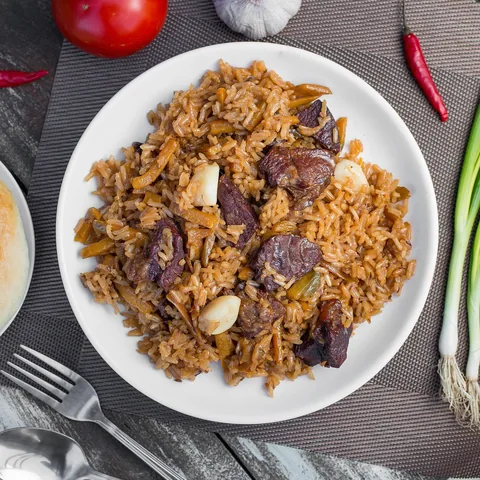
Gazmag plov is fluffy parboiled rice steamed slowly with butter and saffron over a base of lavash or a thin yogurt-egg dough. The base turns into a golden, crunchy crust called gazmag, which is cut into pieces and served on top of the rice. It is usually accompanied by separately cooked toppings such as lamb, chestnuts, dried fruit or herbs.
Diets
Allergens
Contains (in a typical recipe):
What it is made of
Recipe
Ingredients
- 500 g basmati rice
- 100 g butter, melted
- 0.2 g saffron in 50 ml hot water
- 2 sheets thin lavash
- 1 egg
- 2 tbsp yogurt
- salt
Method
- Soak the rice for 1 hour in salted water.
- Boil it in plenty of salted water for 6-7 minutes until half cooked, then drain.
- Brush a heavy pot with butter, beat the egg with yogurt and brush it on the lavash, then line the bottom.
- Spoon the rice on top in a mound, drizzle with butter and saffron water.
- Wrap the lid in a towel, cover and steam on low heat for 45-50 minutes.
- Turn out the rice, break the crust into pieces and serve them on top.
How to make it lighter
- Use half the butter and a little oil for a lighter version.
- Serve with a big herb salad and grilled vegetables instead of fatty meat toppings.
- Swap part of the rice for brown basmati, extending the steaming time.
History
In Azerbaijani cuisine plov is cooked by the 'süzmə' method: the rice is boiled, drained and then steamed, unlike the one-pot plov of Central Asia. The gazmag crust protects the rice from burning and is considered the most prized part of the dish.
Count it in one photo
Point your camera at the table — Me Nutrition recognises Plov with gazmag (crispy-crust plov) and every other dish, with calories and macros for each. Ate only half? Slide it.
Download on the App StoreSimilar dishes
Values are estimates per 100 g for a typical recipe; home and restaurant versions vary. Diets and allergens are worked out from the ingredients of a typical recipe — always check with whoever cooked the dish. Not medical advice. Nutrition data: Me Nutrition dish database v15. How we count →