
Gogal (Azerbaijani spiced flaky pastry)
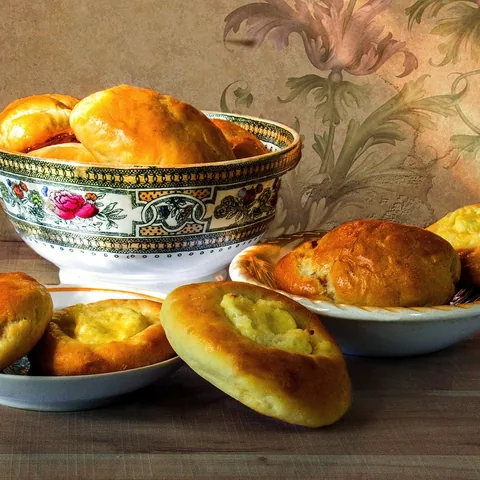
Gogal is a round, many-layered pastry made by spreading yeasted dough with a paste of butter, flour, turmeric and crushed fennel or anise, then rolling and coiling it. The inside is yellow and fragrant, the top glossy with egg and often sprinkled with sesame. There are savoury and slightly sweet versions, and it is eaten with tea.
Diets
Allergens
Contains (in a typical recipe):
What it is made of
Recipe
Ingredients
- 500 g flour
- 250 ml warm milk
- 7 g dry yeast
- 1 egg (plus 1 yolk to glaze)
- Filling paste: 120 g soft butter, 2 tbsp flour, 1 tsp turmeric, 1 tsp crushed fennel seeds, salt
- 1 tbsp sesame seeds
Method
- Knead flour, milk, yeast, egg and a pinch of salt into a soft dough and let it rise for 1 hour.
- Mix the butter, flour, turmeric, fennel and salt into a paste.
- Roll the dough into a large thin sheet, spread it with the paste, roll up tightly and cut into 10 pieces.
- Coil each piece, flatten into a round and make a small dent in the centre.
- Brush with yolk, sprinkle with sesame and rest for 15 minutes.
- Bake at 190 °C for 20–25 minutes until deep golden.
How to make it lighter
- Spread the butter paste thinly; turmeric and fennel give the aroma, not the fat.
- Make smaller gogals of about 50 g.
- Eat one with a protein-rich breakfast such as eggs or cheese to feel full longer.
History
Gogal is one of the traditional Novruz pastries in Azerbaijan, and its round golden shape is commonly said to represent the sun. Families often bake gogal, shekerbura and pakhlava together in the days before the holiday.
Count it in one photo
Point your camera at the table — Me Nutrition recognises Gogal (Azerbaijani spiced flaky pastry) and every other dish, with calories and macros for each. Ate only half? Slide it.
Download on the App StoreSimilar dishes
Values are estimates per 100 g for a typical recipe; home and restaurant versions vary. Diets and allergens are worked out from the ingredients of a typical recipe — always check with whoever cooked the dish. Not medical advice. Nutrition data: Me Nutrition dish database v15. How we count →