
Kata (Azerbaijani layered flatbread)
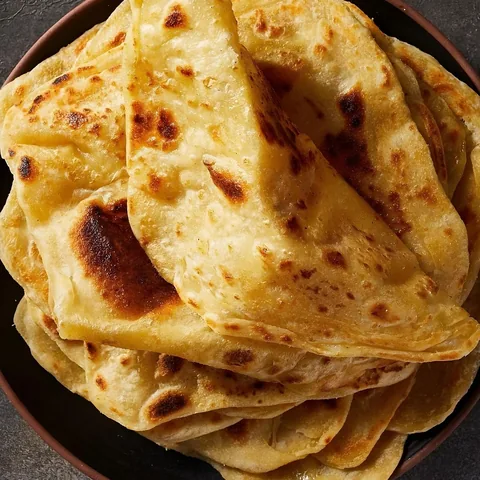
Kata is a round flatbread made of thin dough brushed with butter, folded into layers and filled with onion, pumpkin, greens or just sugar and butter. It comes out flaky and soft inside, savoury or lightly sweet depending on the filling. It is eaten warm with tea or alongside soup.
Diets
Allergens
Contains (in a typical recipe):
What it is made of
Recipe
Ingredients
- 400 g flour
- 200 ml warm water
- 5 g dry yeast
- 100 g melted butter
- 300 g pumpkin, grated
- 1 onion, finely chopped
- Salt, 1 tsp sugar
Method
- Mix flour, yeast, sugar, salt and water into a soft dough and let it rise for 40 minutes.
- Fry the onion lightly in a little butter, add the pumpkin and cook until soft; season and cool.
- Divide the dough into 4 balls and roll each one very thin.
- Brush with butter, spread a layer of filling, fold the edges to the centre and roll out gently again.
- Bake at 200 °C for 20 minutes or cook on a dry griddle, turning once.
- Brush with a little butter and serve warm.
How to make it lighter
- Brush the layers lightly with oil instead of soaking them in butter.
- Use more pumpkin or greens in the filling to add fibre and volume.
- Mix part wholemeal flour into the dough for slower-digesting carbs.
History
Kata is a home bake found across many regions of Azerbaijan, and each family has its favourite filling. Similar layered flatbreads exist throughout the Caucasus and Central Asia.
Count it in one photo
Point your camera at the table — Me Nutrition recognises Kata (Azerbaijani layered flatbread) and every other dish, with calories and macros for each. Ate only half? Slide it.
Download on the App StoreSimilar dishes
Values are estimates per 100 g for a typical recipe; home and restaurant versions vary. Diets and allergens are worked out from the ingredients of a typical recipe — always check with whoever cooked the dish. Not medical advice. Nutrition data: Me Nutrition dish database v15. How we count →