
Khash (Azerbaijani trotter soup)
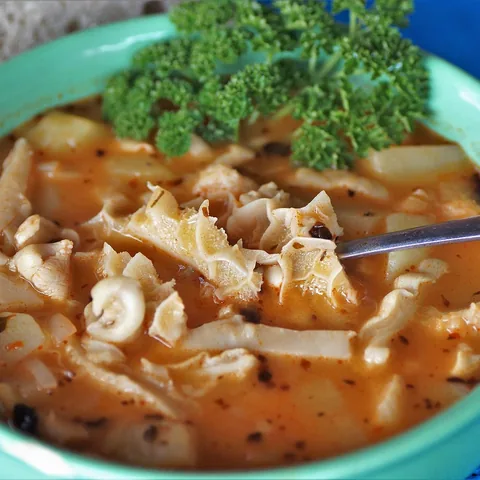
Khash is a plain, rich broth made by simmering cleaned beef or lamb trotters, sometimes with tripe, through the night until the meat falls off and the liquid turns milky and gelatinous. It is not salted in the pot; each diner adds salt, crushed garlic and vinegar to taste. Pieces of dried lavash are crumbled into the bowl, and it is eaten early in the morning, especially in winter.
Diets
Allergens
Contains (in a typical recipe):
What it is made of
Recipe
Ingredients
- 4 beef trotters (about 3 kg), cleaned and split
- 500 g beef tripe (optional)
- 6 garlic cloves, crushed
- vinegar to taste
- dried lavash
- salt, radishes, fresh herbs
Method
- Soak the trotters in cold water for 10–12 hours, changing the water a few times.
- Cover with fresh water, bring to the boil and skim thoroughly.
- Simmer on very low heat for 7–8 hours, topping up with hot water.
- Remove large bones and pull the meat and skin into pieces.
- Serve in hot bowls; add salt, garlic, vinegar and crumbled dry lavash at the table.
How to make it lighter
- Chill the broth overnight and lift off the fat before reheating.
- Go easy on the lavash; the broth itself is filling.
- Serve with plenty of radishes and herbs for freshness.
History
Khash is a cold-season dish across the South Caucasus, eaten as a hearty breakfast and traditionally made with patience rather than seasoning. In Azerbaijan it is often enjoyed with fresh radishes, herbs and pickles.
Count it in one photo
Point your camera at the table — Me Nutrition recognises Khash (Azerbaijani trotter soup) and every other dish, with calories and macros for each. Ate only half? Slide it.
Download on the App StoreSimilar dishes
Values are estimates per 100 g for a typical recipe; home and restaurant versions vary. Diets and allergens are worked out from the ingredients of a typical recipe — always check with whoever cooked the dish. Not medical advice. Nutrition data: Me Nutrition dish database v15. How we count →