
Lavangi fish (Azerbaijani stuffed baked fish)
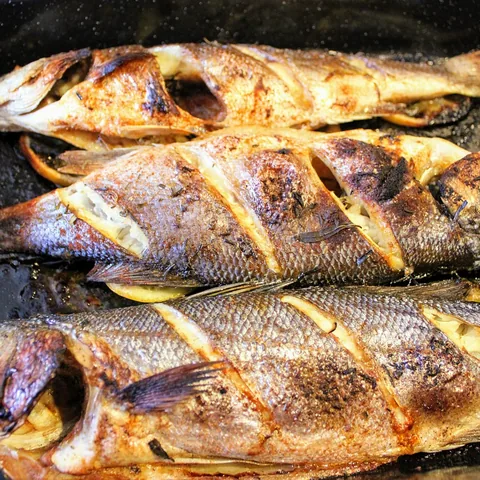
Lavangi is a whole fish, traditionally Caspian kutum, filled with a thick paste of ground walnuts, grated onion and sour cherry plum. In the oven the stuffing turns rich and slightly sweet-sour while the fish stays moist. It is sliced across and served with herbs, flatbread and a squeeze of pomegranate.
Diets
Allergens
Contains (in a typical recipe):
What it is made of
Recipe
Ingredients
- 1 whole white fish or kutum, about 1 kg
- 200 g walnuts
- 2 onions (250 g)
- 60 g sour cherry plum paste (alcha lavashana)
- 2 tbsp oil
- Salt and black pepper
Method
- Clean and gut the fish through the belly, rinse and pat dry, then season inside and out with salt.
- Grind the walnuts finely and grate the onions, squeezing out excess juice.
- Mix walnuts, onion and plum paste with pepper and a pinch of salt into a thick paste.
- Fill the belly with the paste and close it with toothpicks or kitchen string.
- Brush the fish with oil, place on a lined tray and bake at 190 °C for 35–40 minutes.
- Rest for 5 minutes, slice and serve with fresh herbs.
How to make it lighter
- Use less walnut and more onion in the stuffing to cut fat noticeably.
- Serve with a big herb and tomato salad rather than bread.
- A lean white fish such as hake or sea bass works well and is lighter than oily kutum.
History
Lavangi is associated with the Lankaran and Astara areas in the south of Azerbaijan, near the Caspian coast. The same walnut filling is also used for chicken, which is the more common version inland.
Count it in one photo
Point your camera at the table — Me Nutrition recognises Lavangi fish (Azerbaijani stuffed baked fish) and every other dish, with calories and macros for each. Ate only half? Slide it.
Download on the App StoreSimilar dishes
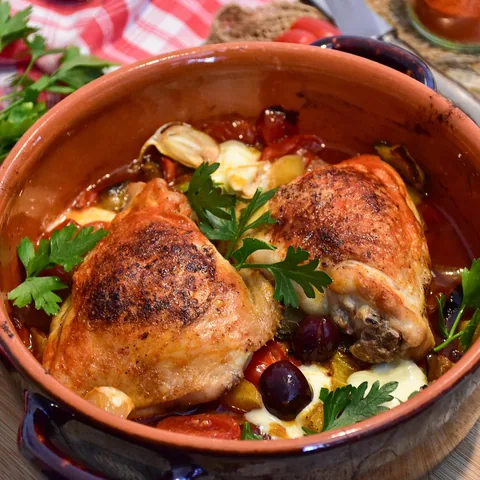
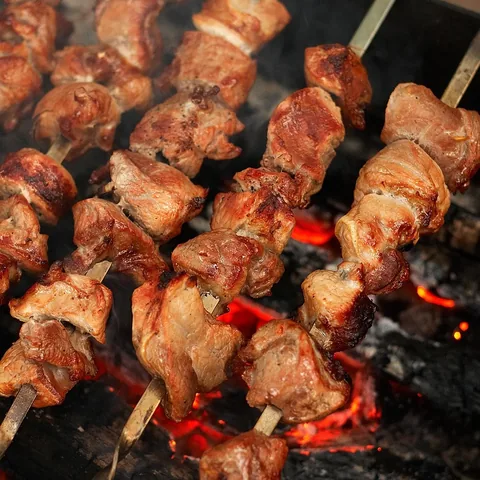
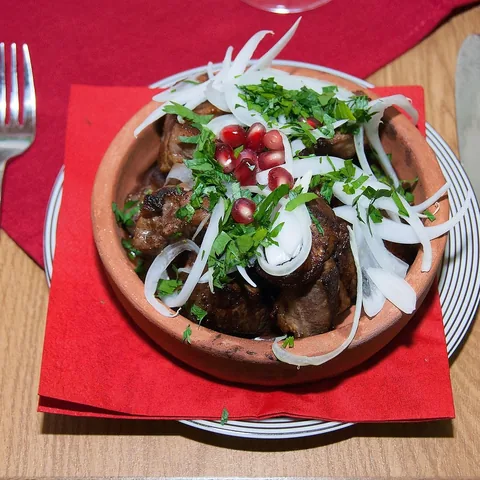
Values are estimates per 100 g for a typical recipe; home and restaurant versions vary. Diets and allergens are worked out from the ingredients of a typical recipe — always check with whoever cooked the dish. Not medical advice. Nutrition data: Me Nutrition dish database v15. How we count →