
Gabaq gutabi (pumpkin gutab)
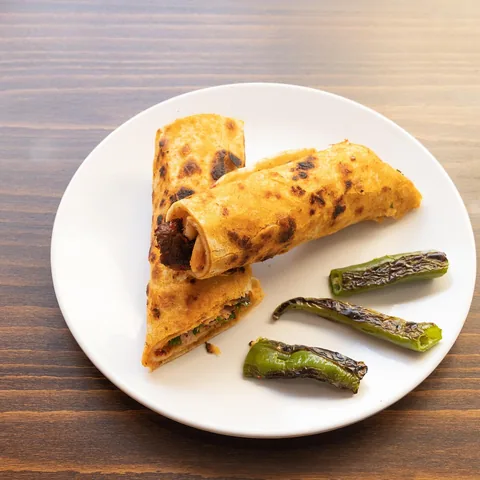
Gutab are paper-thin flatbreads folded into half-moons around a filling and cooked briefly on a dry griddle. The pumpkin version has a sweet, soft filling of grated pumpkin cooked with onion and a little butter, sometimes brightened with pomegranate seeds. Each gutab is brushed with butter as it comes off the pan. They are eaten warm, often with sumac or yogurt.
Diets
Allergens
Contains (in a typical recipe):
What it is made of
Recipe
Ingredients
- 300 g flour
- 160 ml water
- ½ tsp salt
- 600 g pumpkin, grated
- 1 onion
- 30 g butter
- 2 tbsp pomegranate seeds, sumac
Method
- Knead the flour, water and salt into a firm dough and rest it 30 minutes.
- Cook the grated pumpkin and finely chopped onion in half the butter until thick and dry.
- Divide the dough into 10 balls and roll each very thinly into a circle.
- Spread filling on half of each circle, add a few pomegranate seeds, fold and press the edges.
- Cook on a hot dry pan about 1 minute per side.
- Brush lightly with the remaining butter and serve with sumac.
How to make it lighter
- Skip brushing with butter or use only a thin film.
- Use part wholemeal flour for more fibre.
- Pair with a yogurt dip and a salad for a balanced meal.
History
Gutab are one of the most familiar snacks of Azerbaijan, sold at markets and made at home. Pumpkin gutab are especially popular in autumn, alongside the herb and meat versions.
Count it in one photo
Point your camera at the table — Me Nutrition recognises Gabaq gutabi (pumpkin gutab) and every other dish, with calories and macros for each. Ate only half? Slide it.
Download on the App StoreSimilar dishes
Values are estimates per 100 g for a typical recipe; home and restaurant versions vary. Diets and allergens are worked out from the ingredients of a typical recipe — always check with whoever cooked the dish. Not medical advice. Nutrition data: Me Nutrition dish database v15. How we count →