
Kalach (braided ring bread)
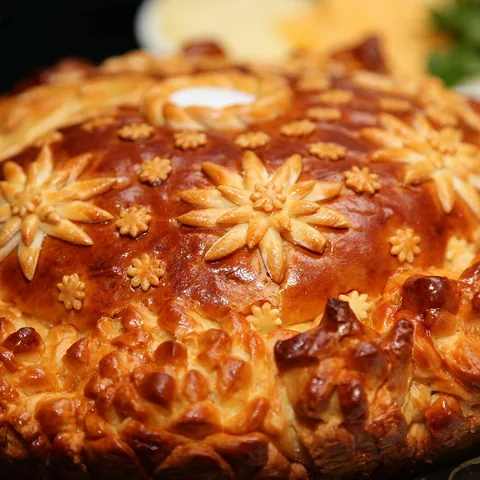
Kalach is a ring of lightly enriched wheat dough, braided from two or three strands and brushed with egg so it bakes into a glossy, deep-golden crown. The crumb is soft and fine with just a hint of sweetness. It is served at holidays, weddings and family celebrations, torn by hand and eaten with tea or butter.
Diets
Allergens
Contains (in a typical recipe):
What it is made of
Recipe
Ingredients
- 600 g flour
- 300 ml warm milk
- 2 eggs + 1 yolk for glazing
- 60 g butter
- 50 g sugar, 8 g salt
- 7 g dry yeast
Method
- Dissolve the yeast and a pinch of sugar in the warm milk.
- Add eggs, sugar, salt and melted butter, then knead in the flour into a smooth, elastic dough.
- Let rise for 1-1.5 hours until doubled.
- Divide into three strands about 60 cm long and braid them.
- Bring the ends together into a ring, place on a lined tray and proof for 30 minutes.
- Brush with yolk and bake at 180 °C for 30-35 minutes.
How to make it lighter
- Slice thinly and enjoy as an occasional treat.
- Use half wholemeal flour for a heartier, higher-fibre loaf.
- Pair with protein such as cheese or eggs for a balanced breakfast.
History
The ring shape of the kalach is often linked in folk tradition with the sun and the circle of life, and the bread appears in Belarusian festive rituals alongside the karavai. Similar braided rings are baked across Eastern and Central Europe.
Count it in one photo
Point your camera at the table — Me Nutrition recognises Kalach (braided ring bread) and every other dish, with calories and macros for each. Ate only half? Slide it.
Download on the App StoreSimilar dishes

Values are estimates per 100 g for a typical recipe; home and restaurant versions vary. Diets and allergens are worked out from the ingredients of a typical recipe — always check with whoever cooked the dish. Not medical advice. Nutrition data: Me Nutrition dish database v15. How we count →